What Is Backflow Prevention and Why Does It Matter?
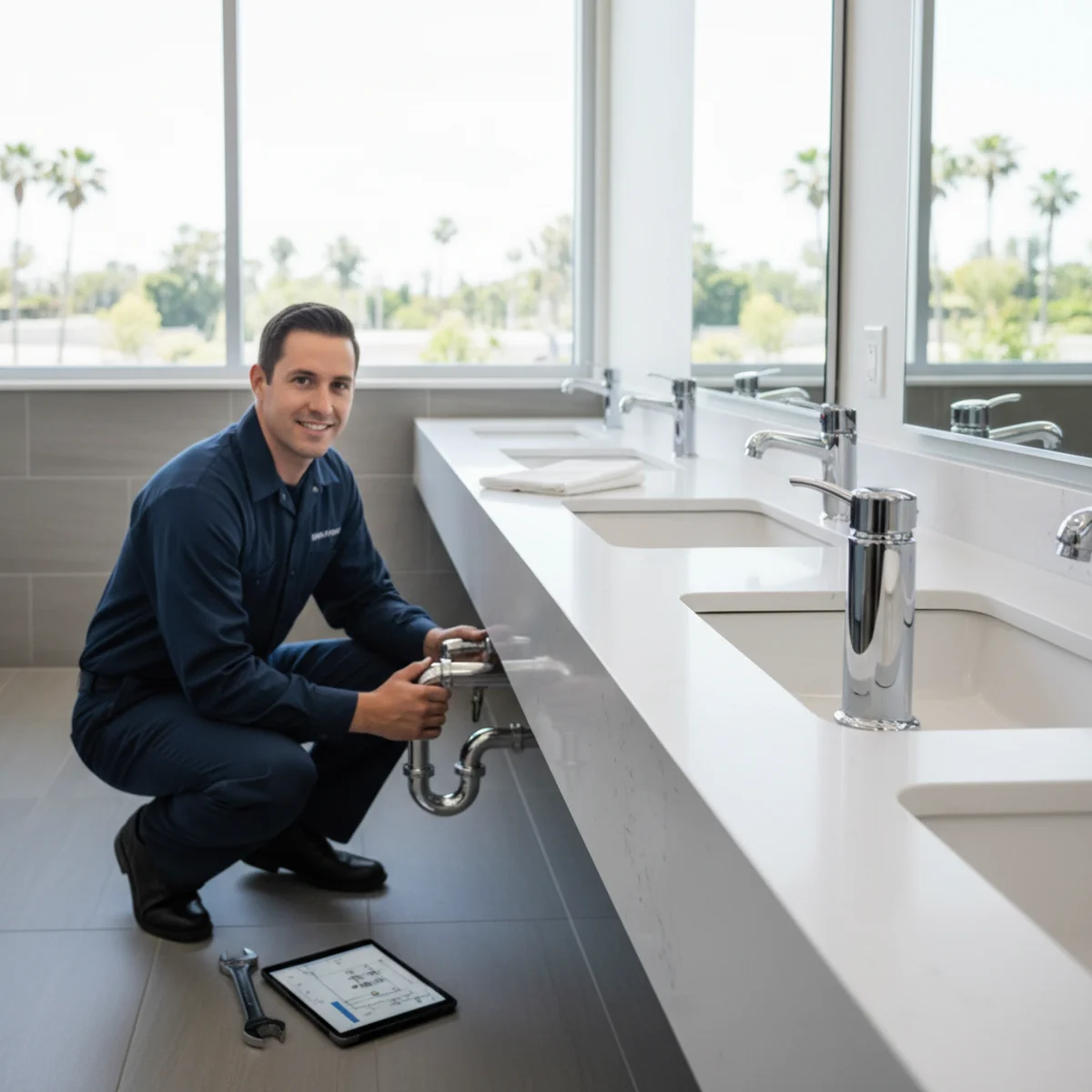
Most days, you trust the water at your tap without a second thought. You fill a glass, you brush your teeth, you cook dinner. You assume that water only flows one direction: from the main, into your home, out the faucet.
But water doesn't always cooperate. Under the wrong conditions, it can reverse course and pull used or contaminated water back into the clean supply. That's backflow, and it can carry fertilizer, soap, grease, or worse into the water you drink.
The good news is that backflow is preventable. A simple device, tested on a schedule, keeps the dirty water out and the clean water flowing the right way. Here's what backflow prevention is, why it matters in Bloomington, and how to stay protected.
Key Takeaways
- Backflow is when contaminated water reverses direction and flows back into the clean drinking-water supply.
- It's caused by back-siphonage (a pressure drop) or back-pressure (downstream pressure rising above the supply).
- Backflow prevention devices use check valves and air gaps to allow flow in one direction only.
- Many commercial properties and homes with irrigation or fire systems are required to test their devices annually.
- A failed or missing device is a real health risk — testing and repair are inexpensive compared to the danger.
Need a plumber in Bloomington, CA? We answer 24/7.
(207) 419-2600What is backflow, exactly?
Your water system is designed to keep pressure flowing in one direction — from the West Valley Water District main, through your meter, and out to your fixtures. Backflow happens when that flow reverses.
There are two ways it occurs. The first is back-siphonage. When pressure in the main drops suddenly — a water-main break, heavy fire-hydrant use, or a big draw nearby on the I-10 corridor — it can create suction that pulls water backward. Think of sipping through a straw, but in reverse through your pipes.
The second is back-pressure. This happens when pressure downstream of the supply rises higher than the supply itself — for example, from a boiler, a pump, or a pressurized irrigation line. The higher pressure pushes used water back toward the main.
Either way, the result is the same: water that has touched soil, chemicals, or waste can end up where your clean water belongs.
Why does backflow matter for your health?
Backflow isn't a theoretical concern. The water that flows backward picks up whatever it last touched.
A garden hose left sitting in a bucket of soapy water or a pool can siphon that water back into the house. An irrigation system can pull fertilizer, pesticide, or pet waste off the lawn. A commercial dishwasher or boiler can push chemical-treated water back toward the supply.
Once contaminated water enters the lines, it doesn't stay put. It can reach your kitchen tap, your ice maker, or a neighbor's home. That's why the issue is taken seriously by water districts and plumbing codes alike.
The protection is straightforward. A backflow prevention device sits at the right point in your system and only lets water move the correct direction. If pressure reverses, the device closes and the contaminated water has nowhere to go.
How do backflow prevention devices work?
Backflow preventers come in a few designs, but they all share one job: allow flow one way, block it the other.
- Air gaps: The simplest method. A physical gap of air between a faucet and the rim of a sink or basin so dirty water can't be drawn back up. You see this on most kitchen faucets already.
- Check valves: Spring-loaded valves that snap shut the moment water tries to flow backward.
- Double check valve assemblies: Two check valves in series for an extra layer of protection, common on irrigation and fire lines.
- Reduced pressure zone (RPZ) assemblies: The strongest protection, used where the contamination risk is high. They vent backward-flowing water to the outside rather than letting it pass.
Choosing the right device depends on the hazard level and how your system is built. That's where professional backflow testing and prevention comes in — matching the assembly to the risk and confirming it actually works.
Who needs a backflow preventer in Bloomington?
Not every home has a dedicated device, but many properties do — and some are legally required to.
Commercial properties are the most common. Restaurants, medical offices, car washes, warehouses, and any business with a boiler, chemical process, or large irrigation system typically need a tested backflow assembly. If you run a business, commercial plumbing service usually includes keeping that device compliant.
On the residential side, homes with in-ground irrigation, a fire-suppression system, a pool auto-fill, or a private well connection often have a backflow preventer at the connection point. Older Bloomington 92316 homes that have added irrigation over the years may have a device that's been ignored for a decade.
If you're unsure whether you have one or whether it's required, a quick look by a licensed plumber will tell you. The water district can also flag a property that's due for testing.
Why does backflow testing need to happen regularly?
A backflow device is mechanical. It has springs, seals, and moving parts, and those wear out. A device that worked perfectly when installed can fail silently years later, and you'd never know until contamination occurred.
That's why most jurisdictions require annual testing by a certified tester. The test uses gauges to confirm the check valves hold pressure and close properly. If a part has failed, it gets repaired or replaced on the spot.
Testing is quick and inexpensive — far cheaper than the alternative of contaminated water reaching your tap or a code violation shutting down a business. If your water district sends an annual testing notice, don't set it aside.
We handle scheduling, testing, and any needed repairs as part of keeping your water safe. If you've received a notice or simply can't remember the last time your device was checked, contact us and we'll get it sorted before the deadline.
Backflow and clean water work together
Backflow prevention is one piece of keeping your water safe, but it's not the only one. Once you know the supply is protected against reversal, the next concern is the quality of what's flowing forward.
Bloomington's water is generally hard, and many homeowners pair backflow protection with treatment. A water filtration system addresses taste, sediment, and chlorine, while a backflow device handles the structural safety of the supply itself.
Think of it as two layers. One keeps contaminants from flowing back in. The other improves the water already moving the right direction. Together, they cover both the safety and the quality of every glass you pour.
Frequently Asked Questions
Related Plumbing Services
Have a plumbing problem in Bloomington?
Don't let a small issue become an emergency. Call for fast, local, upfront-priced help.
Related Articles
All articlesCommercial PlumbingCommercial Plumbing Tips for Bloomington Businesses
For a business, a plumbing problem is lost revenue. Here's how Bloomington businesses can prevent downtime and stay ahead of plumbing issues.
Commercial PlumbingWarehouse Plumbing Issues in the Inland Empire
The Inland Empire's warehouses have plumbing challenges all their own. Here are the common issues and how to keep operations flowing.
Commercial PlumbingRestaurant Plumbing Problems That Need Fast Repair
In a restaurant, a clogged line can stop service cold. Here are the plumbing problems that need fast repair — and regular prevention.