Warehouse Plumbing Issues in the Inland Empire
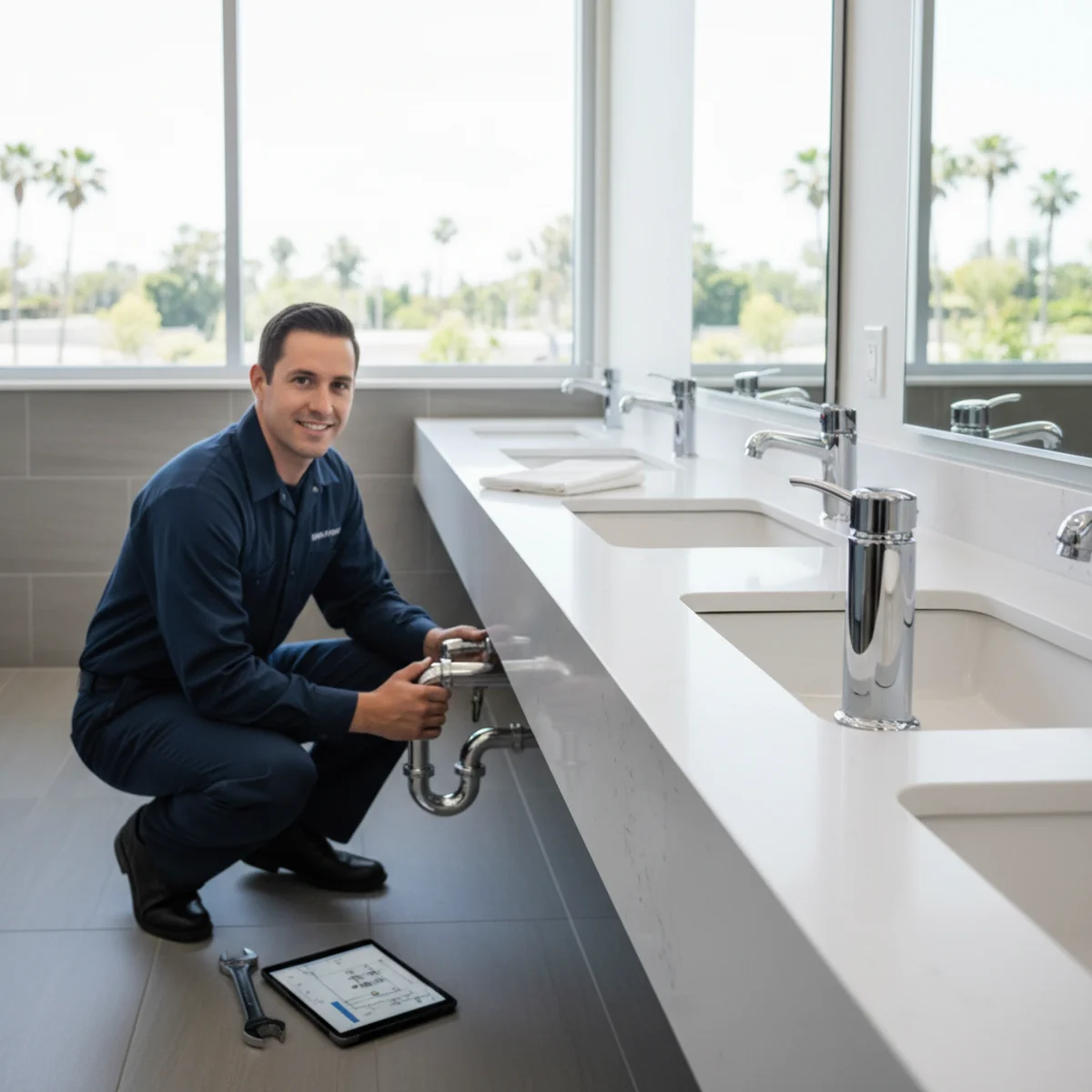
Warehouses do not look like they have much plumbing. A few restrooms, a break room, maybe a wash station. But the plumbing in a large distribution building works differently than it does in a store or office, and when it fails, it can stop work across a huge footprint.
A leak you cannot find in a 100,000 square foot building. A restroom that serves dozens of workers per shift. Long underground lines running under slab and clay soil. These are the kinds of challenges warehouses face, and ignoring them gets expensive fast.
With the volume of distribution buildings along the I-10 corridor here, this matters to a lot of operators. Here are the common warehouse plumbing issues and how to keep your operation flowing.
Key Takeaways
- Long underground supply and sewer lines make warehouse leaks hard to locate without the right equipment.
- High-traffic restrooms wear fixtures fast and need commercial-grade parts and regular service.
- Slab construction over clay soil can shift and stress underground lines over time.
- A small unseen leak in a large building can run up a major water bill before anyone notices.
- Backflow prevention and code compliance are ongoing obligations for commercial buildings.
Need a plumber in Bloomington, CA? We answer 24/7.
(207) 419-2600Why are warehouse leaks so hard to find?
Scale is the problem. In a small building, a leak announces itself quickly. In a warehouse, water can run for a long time before anyone sees a sign, and by then it may have traveled far from the source.
Many warehouse supply and sewer lines run underground, under a concrete slab, across a large area. A leak below the slab does not always surface where the break is. It follows the path of least resistance and may show up as a damp spot, a crack, or simply a climbing water bill.
This is where professional leak detection earns its keep. Using meter testing, acoustic listening, and line tracing, we can pinpoint a leak without tearing up the whole floor. That precision saves enormous time and money in a building this size.
What does clay soil do to warehouse plumbing?
A lot, slowly. The clay and adobe soils common around Bloomington expand when wet and shrink when dry. That movement puts stress on anything buried in it, including water and sewer lines.
Over years, that seasonal shifting can crack rigid pipe, pull joints apart, or create bellies in a sewer line where waste pools and clogs. A slab poured over that soil can move too, stressing the lines that pass through it.
For older buildings or ones with original cast-iron or clay sewer pipe, this is a real long-term concern. A camera inspection of the underground lines shows exactly what is happening down there, so you can plan a water line repair or a sewer fix before it becomes a failure that halts operations.
How do high-traffic restrooms hold up in a warehouse?
They take a beating. A warehouse restroom may serve dozens of workers across multiple shifts, every day. That is far more use than a typical commercial restroom, and standard fixtures wear out under it.
Flush valves fail. Faucets drip and then leak. Drains clog from heavy use. Each individual fixture seems minor, but multiply it across a busy facility and the maintenance load adds up.
The fix is commercial-grade fixtures built for the load, plus regular service to catch wear before it becomes a failure. Routine commercial plumbing maintenance keeps restrooms working and your workforce productive, instead of waiting in line for the one stall that still flushes.
Why does a small leak cost so much in a big building?
Because nobody is watching that corner. In a warehouse, a leaking valve or a running toilet in a rarely used restroom can go unnoticed for weeks. The whole time, it is adding to your water bill.
A single fixture leaking continuously wastes a surprising amount of water over a month. Multiply that by a building's worth of fixtures and a slow underground leak, and you can be paying for thousands of gallons that never did any work.
The defense is monitoring and maintenance. Periodic checks of your fixtures, a look at your water meter for unexplained movement when nothing is running, and prompt commercial drain cleaning when lines slow down all keep waste and surprises low.
What about backflow and code compliance?
Warehouses have the same backflow obligations as other commercial buildings, and sometimes more. Loading dock wash-downs, irrigation, fire suppression systems, and process equipment all create backflow risk that must be controlled.
Your water purveyor typically requires annual certified testing of backflow assemblies, with documentation. Miss it, and you risk fines or a shut-off.
We provide backflow testing and prevention, keep your records current, and pull permits when work requires them. Folding this into a maintenance schedule means compliance happens quietly in the background instead of becoming a last-minute scramble when a notice shows up.
How do you keep a warehouse operation flowing?
The answer for a large facility is the same as for a restaurant, just at a bigger scale: stay ahead of it.
- Schedule regular inspections of restrooms, wash stations, and break rooms
- Camera-inspect underground lines periodically, especially older clay or cast-iron sewer
- Keep backflow testing and documentation current
- Watch the water bill and meter for signs of a hidden leak
- Know where every shut-off is, and label them clearly
A maintenance partnership tuned to a warehouse's layout and shifts prevents the kind of failure that idles workers and stalls shipments. You can contact us to set up a plan, and we are available 24/7 with flat-rate pricing when something cannot wait.
Frequently Asked Questions
Related Plumbing Services
Have a plumbing problem in Bloomington?
Don't let a small issue become an emergency. Call for fast, local, upfront-priced help.
Related Articles
All articlesCommercial PlumbingCommercial Plumbing Tips for Bloomington Businesses
For a business, a plumbing problem is lost revenue. Here's how Bloomington businesses can prevent downtime and stay ahead of plumbing issues.
Commercial PlumbingRestaurant Plumbing Problems That Need Fast Repair
In a restaurant, a clogged line can stop service cold. Here are the plumbing problems that need fast repair — and regular prevention.
Commercial PlumbingWhat Is Backflow Prevention and Why Does It Matter?
Backflow prevention is a quiet but crucial safeguard for your drinking water. Here's what it is and why testing matters.