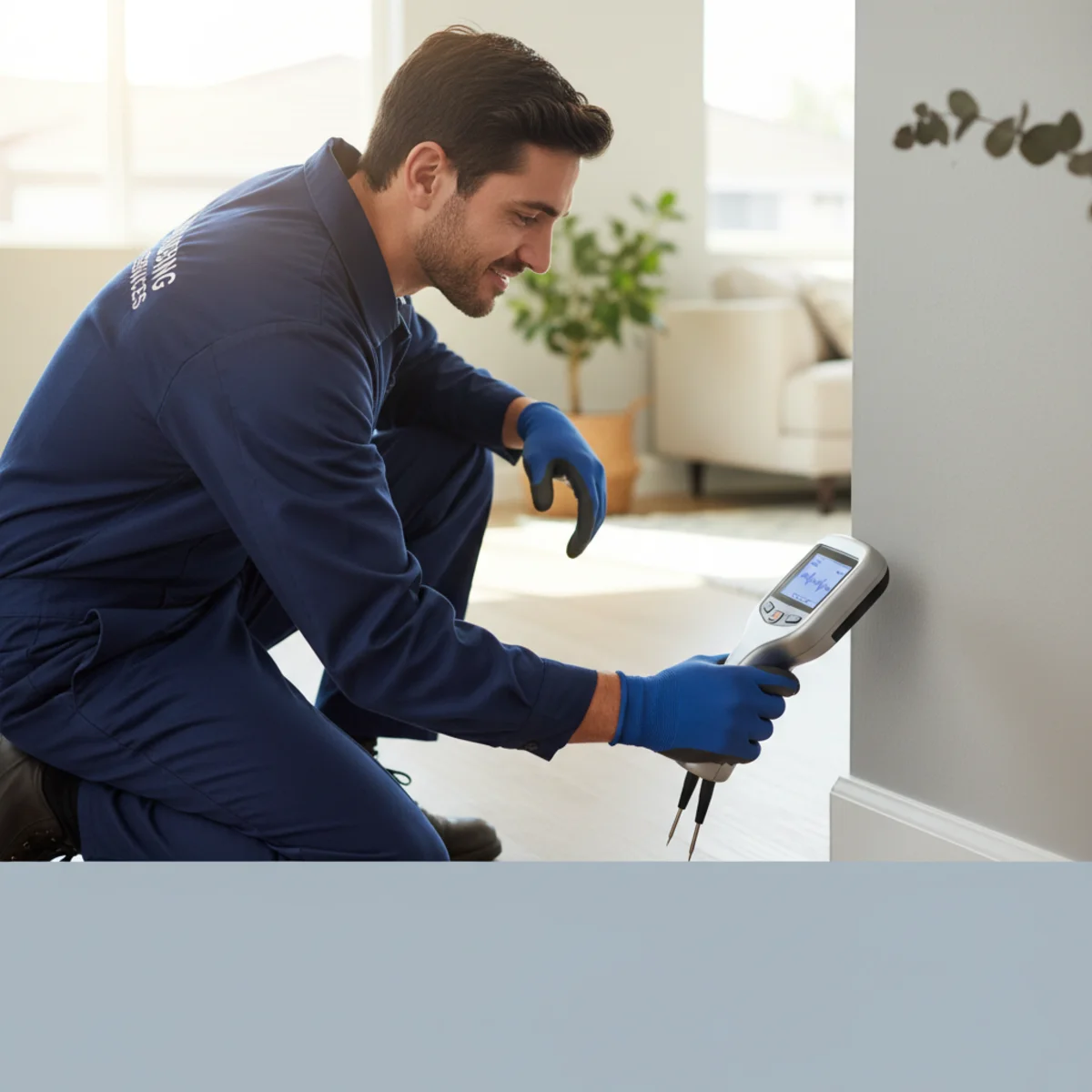
A hidden plumbing leak rarely announces itself. There's no burst pipe, no puddle on the floor, no dramatic gush. Just water quietly escaping inside a wall, under a slab, or above a ceiling while the damage adds up day after day.
That's what makes them so costly. By the time you see a stain or smell something musty, the leak has often been running for weeks. Wood is soft, drywall is swollen, and mold may already be settling in. A small drip can waste hundreds of gallons and quietly inflate your water bill the whole time.
The good news: hidden leaks leave clues. Once you know what to watch for, you can catch one early and call for leak detection before it turns into a tear-out-the-wall repair.
Key Takeaways
- Hidden leaks usually show up as higher water bills, musty smells, or stains long before you see actual water.
- A simple water-meter test will tell you whether water is moving when every fixture is off.
- Warm spots on the floor or the sound of running water inside a wall can point to a leak under the slab.
- Catching a leak early protects your foundation, framing, and indoor air quality and keeps repair costs down.
- Professional acoustic and infrared tools find the source without guesswork or unnecessary demolition.
Need a plumber in Bloomington, CA? We answer 24/7.
(207) 419-2600How do I use my water meter to check for a leak?
This is the single most useful test a homeowner can run, and it costs nothing.
First, turn off every water-using fixture and appliance in the house. No faucets, no ice maker, no irrigation, no running toilets. Then find your water meter, usually in a box near the street or along the front of the property here in Bloomington.
Note the reading, or watch the small leak-indicator dial (often a little triangle or gear). Wait 20 to 30 minutes without using any water, then check again. If the numbers moved or the dial spun, water is escaping somewhere on your side of the meter.
To narrow it down, shut off the valve at the water heater or to a single bathroom and repeat. If the meter stops moving, you've found the zone. From there, a plumber can pinpoint the exact spot.
Could the leak be under my slab?
Many Bloomington homes sit on concrete slab foundations, and the water lines often run beneath that slab. When one of those lines springs a leak, the water has nowhere to go but into the ground and up through the concrete.
Slab leaks have their own signature signs: a section of floor that feels unusually warm (from a hot-water line), the sound of water running when everything is off, unexplained moisture or cracking in the flooring, or a water heater that runs constantly trying to keep up.
These leaks are serious because the water can undermine the foundation and saturate the soil. Our clay and adobe soils swell and shift when they get wet, which only makes movement worse. If you suspect one, don't wait. A slab leak inspection uses listening equipment to find the line without jackhammering the whole floor.
How do plumbers find a leak without tearing up the house?
Modern leak detection is far less destructive than it used to be. We don't start by opening walls. We start by listening and measuring.
Acoustic sensors amplify the sound of water escaping a pressurized line, even through concrete and tile. Infrared cameras spot temperature differences where water has cooled or warmed a surface. Pressure tests confirm whether a line is holding or losing water. Together, these tools let us mark an X on the exact spot before any cutting happens.
That precision saves you money. Instead of opening a whole wall or breaking up a large section of slab, we access only what's necessary to make the repair. If you're seeing the signs above, contact us and we'll track it down. Once the source is fixed, any resulting water damage repairs can be addressed too.
Frequently Asked Questions
Related Plumbing Services
Have a plumbing problem in Bloomington?
Don't let a small issue become an emergency. Call for fast, local, upfront-priced help.
Related Articles
All articlesLeak DetectionHow to Find a Water Leak in Your Home
A high bill or the sound of running water can mean a hidden leak. Here's how to track it down — starting with a simple meter test.
Leak DetectionWhen to Call a Plumber for a Leaking Ceiling
A spreading stain on the ceiling is never nothing. Here's what causes ceiling leaks and when to call a plumber right away.
Leak DetectionSlab Leak Warning Signs California Homeowners Shouldn't Ignore
A warm spot on the floor and a soaring water bill can mean a pipe is leaking under your foundation. Don't ignore these slab leak signs.