Why Your Drains Keep Clogging in Bloomington Homes

You plunged it. It drained. A week later, it is slow again. So you plunge it once more, maybe pour in some chemical cleaner, and the cycle repeats.
A drain that clogs over and over is exhausting, and it is also trying to tell you something. The clog you keep clearing is not the disease — it is the symptom. Something deeper in the line is catching debris and rebuilding the blockage every time.
In Bloomington homes, the cause is usually predictable: aging pipes, hard-water scale, grease buildup, or roots in the sewer line. Once you know which one you are dealing with, you can stop fighting the same clog forever. Here is what is really going on inside your pipes.
Key Takeaways
- A drain that clogs repeatedly points to a deeper buildup or pipe problem, not a one-time blockage.
- Grease and food are the top kitchen offenders; hair and soap scum dominate bathroom drains.
- Hard-water scale narrows pipe walls over time, giving debris more to cling to.
- Old galvanized and cast-iron pipes corrode and roughen inside, catching everything that passes.
- If several drains are slow at once, the problem is likely in the main sewer line, not a single fixture.
Need a plumber in Bloomington, CA? We answer 24/7.
(207) 419-2600Why does the same drain keep clogging?
When you snake or plunge a clog, you usually punch a hole through it rather than removing all of it. Water flows again, so the problem looks solved. But the residue left on the pipe walls becomes the foundation for the next blockage, and it builds back faster each time.
The real question is what keeps feeding that buildup. In most Bloomington homes it comes down to a few culprits: grease and food in the kitchen, hair and soap in the bathroom, mineral scale from hard water, rough corroded pipe walls in older homes, or roots and bellies in the main line.
A one-and-done plunge cannot fix any of those. Proper drain cleaning scours the pipe wall clean so debris has nothing to grab onto, which is why the results last far longer than a quick clear.
What clogs kitchen drains most often?
Grease is the number one kitchen offender. It pours down warm and liquid, then cools and hardens on the pipe wall like candle wax. Every bit of food and soap that follows sticks to it.
Common kitchen culprits include:
- Cooking grease, oil, and bacon fat
- Coffee grounds and eggshells
- Starchy foods like pasta, rice, and potato peels that swell with water
- Fibrous scraps like celery and onion skins
A garbage disposal helps, but it does not change what grease does once it is past the disposal. If your kitchen line clogs on a schedule, the grease layer downstream is the reason. Keeping fats out of the drain and scheduling periodic kitchen plumbing maintenance breaks the cycle.
Why do bathroom drains clog so often?
Bathrooms are a different recipe. Here the villains are hair, soap scum, and toothpaste, and they work together. Hair tangles into a net across the pipe, soap scum coats it, and the mat grows until water can barely pass.
Hard water makes it worse. Bloomington's water is generally hard — verify the specifics against the latest West Valley Water District water-quality report — and those minerals leave a chalky film inside pipes and on fixtures. That rough film gives hair and soap even more to cling to.
A drain screen over the tub and shower catches most hair before it goes down. For drains that have been slow for a while, a professional cleaning removes the existing mat instead of just poking through it.
Could my old pipes be the problem?
Many homes around Bloomington and the I-10 corridor still have their original galvanized steel or cast-iron drain lines. These pipes do not stay smooth. Over decades, galvanized steel corrodes and cast iron develops a rough, scaly interior.
That rough surface is a magnet for debris. Even small amounts of grease, hair, or sediment snag on the pitted walls and start a new clog. You can clean these pipes, but if they keep failing, the pipe itself has reached the end of its life.
When clogs are constant and the pipes are old, repair stops being economical and replacement becomes the smarter move. A sewer camera inspection shows the true interior condition so you are not guessing about whether to clean or replace.
When does a repeat clog mean a sewer problem?
Here is the test. If just one fixture is slow, the problem is local to that drain. If several drains slow down together — the kitchen, a bathroom sink, and a tub all sluggish — the blockage is likely in the main sewer line that carries everything out of the house.
Other signs of a main-line issue:
- Toilets gurgle when you run a sink or the washing machine
- Water backs up into a tub or shower when you flush
- A sewage smell in the yard or near floor drains
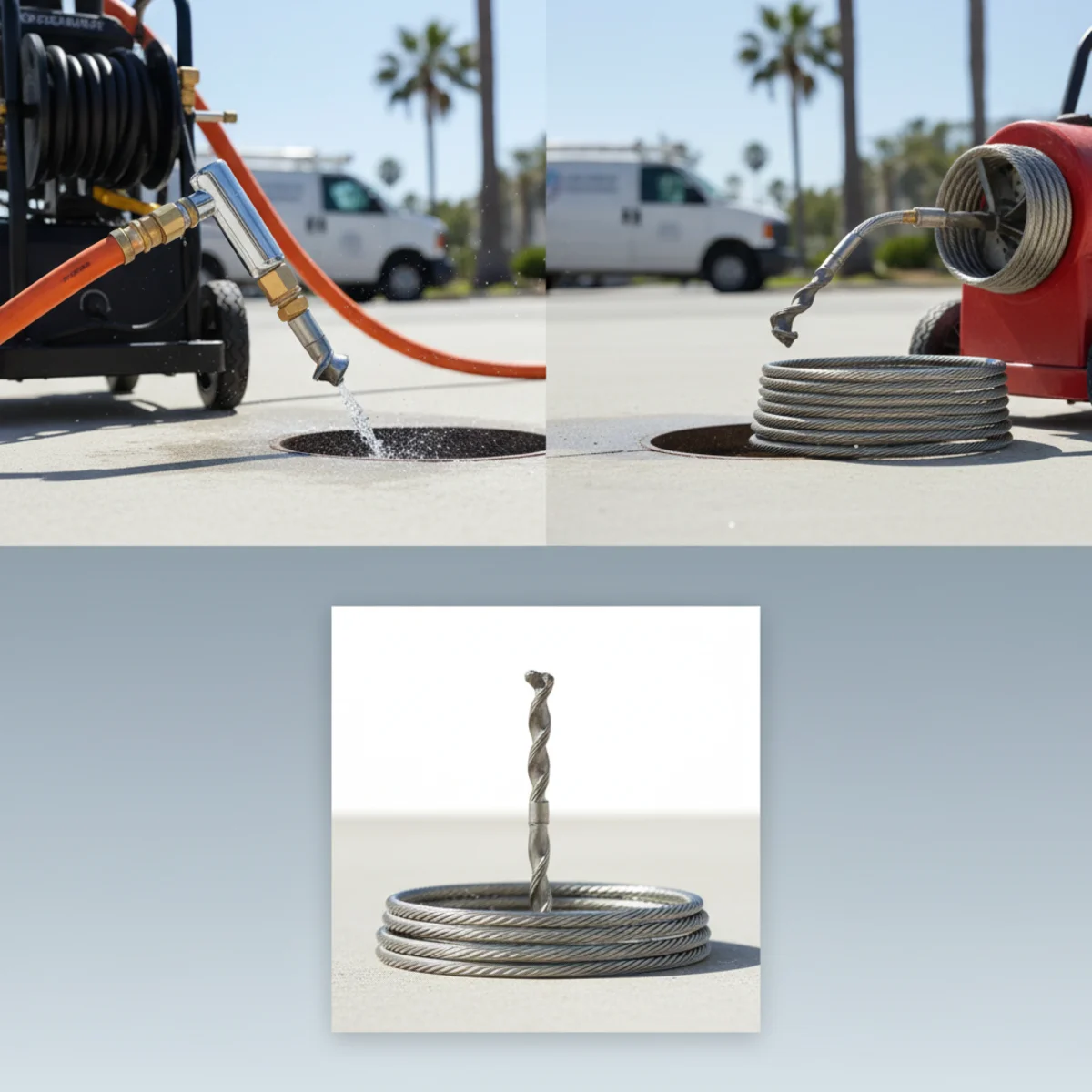
In Bloomington's older neighborhoods, mature trees send roots into sewer joints, and clay or shifting soil can cause a low spot, or "belly," where waste collects. For these, hydro jetting cuts through roots and scours the line in a way snaking cannot match.
How do I stop the cycle for good?
Breaking the loop is about cleaning thoroughly and then keeping the line clean.
- Have the drain cleaned fully, not just punched through, so the pipe wall is clear
- Use screens on tub, shower, and sink drains to catch hair and food
- Keep grease, oil, and coffee grounds out of the kitchen drain entirely
- Run hot water after dishwashing to keep residue moving
- For homes with hard water, consider a water softener to slow scale buildup
If clogs keep coming back after a real cleaning, that is your cue to look deeper with a camera. Persistent clogs are rarely bad luck — they are a line asking for attention. Reach out and contact us and we will find the actual cause instead of treating the symptom.
Frequently Asked Questions
Related Plumbing Services
Have a plumbing problem in Bloomington?
Don't let a small issue become an emergency. Call for fast, local, upfront-priced help.
Related Articles
All articlesDrain CleaningHow to Prevent Kitchen Sink Clogs
Most kitchen clogs are preventable. Here are the simple habits that keep your kitchen drain flowing — and the ones that cause backups.
Drain CleaningWhy Bloomington Homes Need Professional Drain Cleaning
That bottle of chemical drain cleaner may be damaging your pipes. Here's why professional drain cleaning is the smarter choice.
 Drain Cleaning
Hydro Jetting vs Drain Snaking: Which Is Better?
Both clear clogs, but they're not interchangeable. Here's when snaking is enough and when only hydro jetting will solve the problem.