
Drip. Drip. Drip. At first you barely notice it. Then it is all you hear at night, and you start wondering whether to tighten the handle harder or just live with it.
A dripping faucet feels minor, so it gets ignored. But that steady leak wastes a surprising amount of water over a month, drives up your bill, and slowly stains the sink. Worse, the drip is usually a sign that a small part inside has worn out — and it will only get worse.
The fix is almost always cheap and quick. Here is what causes a faucet to keep dripping, why our local water makes it more common, and when to stop fighting it and call.
Key Takeaways
- A dripping faucet is almost always a worn internal part — a washer, O-ring, or cartridge — not the whole fixture failing.
- Bloomington's generally hard water speeds up wear by leaving mineral scale on faucet parts and valve seats.
- A constant drip wastes water and money every day and can stain or corrode the sink over time.
- Most drips are an inexpensive repair, but cracked bodies or badly corroded valves may mean replacement.
- Fixing a drip early prevents the bigger problem of a faucet that will not shut off at all.
Need a plumber in Bloomington, CA? We answer 24/7.
(207) 419-2600What's actually causing the drip?
A faucet's job is to make a watertight seal when you turn it off. A drip means that seal is failing somewhere inside. The usual culprits:
- A worn rubber washer or O-ring that no longer seats tightly
- A failed cartridge in modern single-handle faucets
- A corroded or pitted valve seat the washer presses against
- Mineral buildup holding parts slightly open
Each is a small, replaceable component. The faucet itself is usually fine. That is why most drips are a quick, affordable faucet repair rather than a full replacement — once you know which part has worn out.
Why hard water makes Bloomington faucets drip
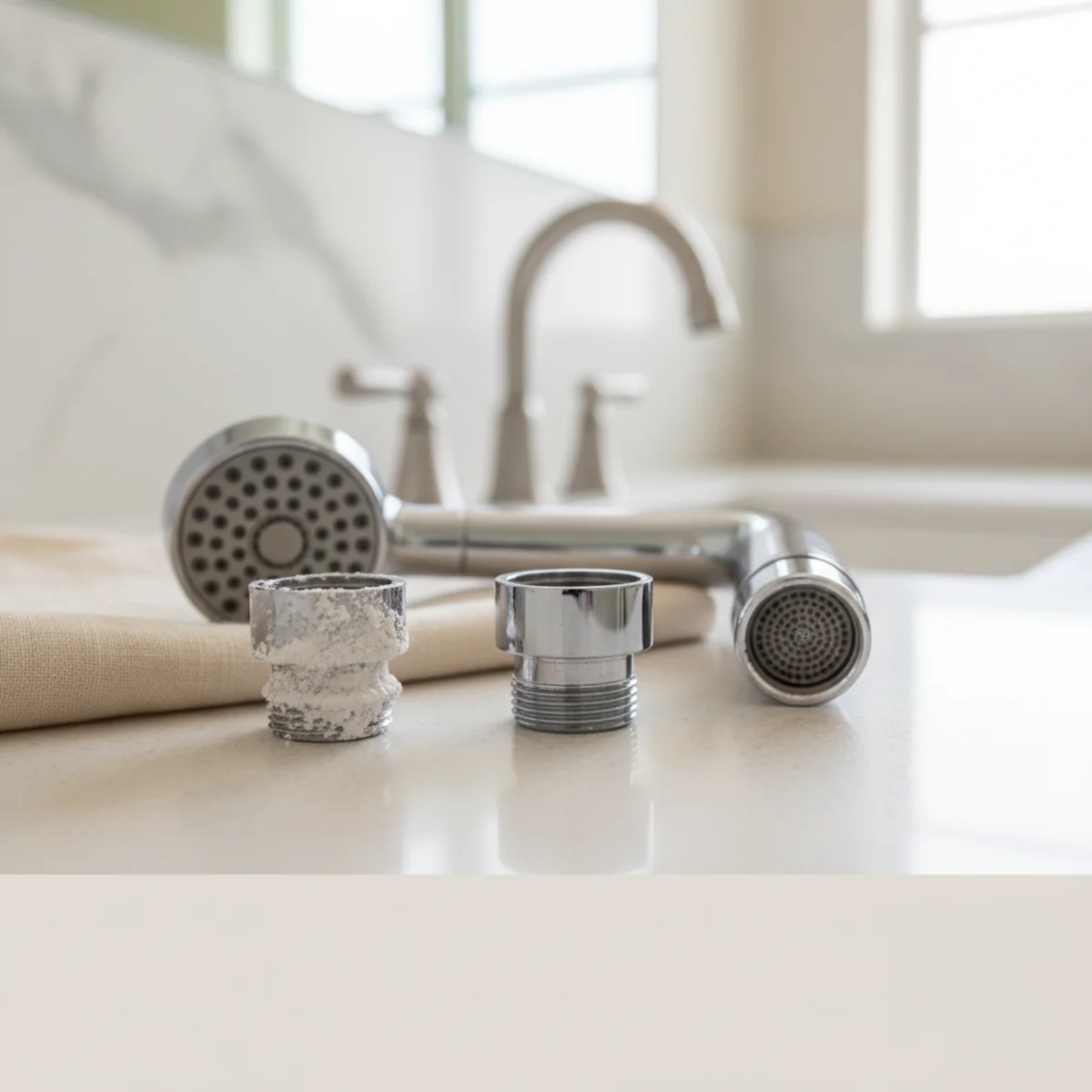
Bloomington's water is generally hard, and hard water is rough on faucets. As water evaporates, it leaves behind mineral scale — the same crusty white buildup you see around aerators and showerheads.
Inside the faucet, that scale builds up on washers, cartridges, and valve seats. It grinds away soft rubber parts faster and can keep a valve from closing fully, which shows up as a drip.
This is why faucets here tend to need attention sooner than the manufacturer's lifespan suggests. Reducing the mineral load with a water softener protects not just faucets but every fixture and appliance the water touches.
Is a dripping faucet really worth fixing?
It is easy to dismiss a drip as harmless. It is not, for a few reasons.
A steady drip runs around the clock, and those drops add up on your water bill month after month. You are paying for water that goes straight down the drain.
It also damages the sink. Constant dripping stains porcelain, leaves mineral tracks, and can corrode the finish over time. In our hard water, those drip marks set into stubborn scale rings that are hard to scrub away.
And the underlying wear only progresses — today's drip is tomorrow's faucet that will not shut off, or a leak that creeps under the sink and into the cabinet. Catching it early keeps a cheap fix cheap and spares you a soggy vanity floor down the line.
Can I fix a dripping faucet myself?
Sometimes, yes. If you are handy, a worn washer or cartridge is a doable project. The basic steps:
- Shut off the water at the valves under the sink
- Plug the drain so small parts cannot fall in
- Take the handle apart and inspect the washer, O-ring, or cartridge
- Bring the old part to the store to match it exactly
- Reassemble and test
Where people get stuck is matching parts, freeing components fused by mineral buildup, or finding a corroded valve seat underneath. Cartridge faucets in particular can vary by brand and model, so the wrong replacement simply will not seal.
If the drip persists after a new washer, parts crumble as you work, or you cannot get the old cartridge to budge, the worn surface is deeper inside and worth handing to a pro. There is no shame in it — a seized valve seat fights back hard.
When a drip means it's time to replace the faucet
Most drips are a repair. But a few signs point toward replacement instead:
- The faucet body itself is cracked or leaking, not just dripping from the spout
- The valve seat is so corroded that new washers fail quickly
- The fixture is old, and parts are no longer available
- You are repairing the same faucet again and again
At that point, putting money into worn-out internals stops making sense. A new fixture installed correctly can solve the drip for good and often improves flow. A plumber can tell you honestly which path costs less over time, often as part of broader sink repair work.
How to make a faucet repair last in hard water
Once a drip is fixed, a little upkeep keeps it from coming back fast:
- Wipe mineral buildup off the aerator and handle base regularly
- Soak removable aerators in vinegar to dissolve scale
- Avoid cranking handles shut hard, which wears washers faster
- Consider treating the home's water to cut the mineral load at the source
In our area, that last step does the most good. Softer water means faucet parts — and water heaters, and appliances — wear at a normal pace instead of an accelerated one. If your faucets seem to drip again and again, the water itself is usually the reason. Reach out through contact us and we can look at both the fixture and the bigger picture.
Frequently Asked Questions
Related Plumbing Services
Have a plumbing problem in Bloomington?
Don't let a small issue become an emergency. Call for fast, local, upfront-priced help.
Related Articles
All articlesBloomington Homeowner TipsWhat Causes a Toilet to Keep Running?
That endless hiss and refill is wasting gallons. Here's what causes a toilet to keep running and how it's fixed.
 Bloomington Homeowner Tips
How Hard Water Affects Plumbing Fixtures
Crusty faucets and spotty dishes are just the start. Here's how Bloomington's hard water quietly damages your plumbing — and how to fight back.
Bloomington Homeowner TipsCommon Causes of Low Water Pressure in Bloomington, CA
Low water pressure has many causes, and hard water is a big one here. Here's how to track down weak flow in your Bloomington home.