How Hard Water Affects Plumbing Fixtures
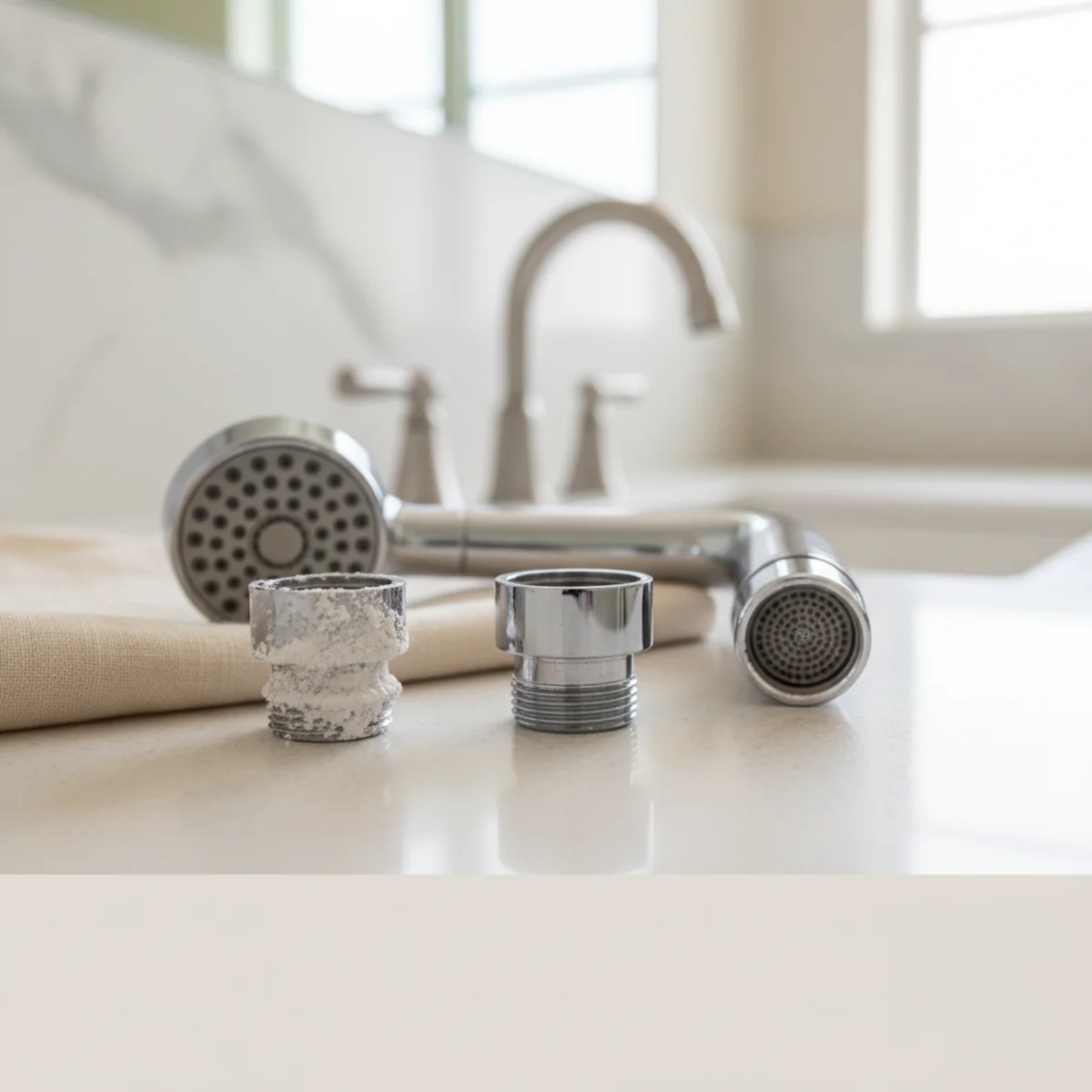
You scrub the faucet and a week later the white crust is back. Your glasses come out of the dishwasher spotted. The showerhead sprays in three crooked directions instead of one. You assume it's just cleaning you're behind on.
It isn't. It's hard water, and it's quietly working against every fixture and pipe in your home. The crusty buildup you see on the outside is also forming on the inside — inside faucets, valves, water heaters, and appliances where you can't reach it.
Left alone, hard water shortens the life of everything it touches and chips away at your water pressure. The good news is that it's manageable once you understand what's happening. Here's how Bloomington's hard water damages fixtures and what you can do about it.
Key Takeaways
- Hard water carries dissolved calcium and magnesium that deposit as scale on and inside fixtures.
- Scale clogs aerators and showerheads, fouls valves, and insulates water heaters, making them work harder.
- Bloomington water is generally hard; verify the specifics against the latest WVWD water-quality report.
- A water softener is the most effective long-term fix; descaling and regular cleaning help in the meantime.
- Catching hard-water damage early protects fixtures, appliances, and your water pressure.
Need a plumber in Bloomington, CA? We answer 24/7.
(207) 419-2600What makes water 'hard,' and why does it matter?
Hard water simply means water with a high level of dissolved minerals — mainly calcium and magnesium. These minerals are picked up as water moves through rock and soil before it reaches the West Valley Water District system.
The minerals themselves aren't a health hazard. The problem is what they do as water moves through your plumbing. When hard water sits, heats, or evaporates, those minerals come out of solution and harden into a chalky deposit called scale.
Scale is stubborn. It bonds to metal, plastic, and ceramic. A thin layer forms with every cycle of water through a fixture, and over months and years it builds into the crusty deposits you see — plus a matching layer you don't, on the inside.
Bloomington's water is generally hard. You can check the latest WVWD water-quality report for current figures, but if you live here, you're almost certainly dealing with it.
How hard water clogs faucets and showerheads
The first places you'll notice trouble are the small openings water passes through.
Faucet aerators — the little screened tips on the end of a faucet — are prime targets. Scale collects in the mesh and slowly chokes the flow. A faucet that once ran strong starts to sputter or trickle. Often you can unscrew the aerator, soak it in vinegar, and restore most of the flow.
Showerheads suffer the same way. Those tiny spray holes clog one by one until the water sprays sideways or weakly. Soaking the showerhead in vinegar overnight dissolves much of the deposit.
But the buildup isn't only at the tip. Scale forms inside the faucet body, around the valve cartridge, and in supply lines. When cleaning the aerator no longer restores flow, the problem has moved deeper, and a faucet repair may be the fix that brings pressure back.
Why hard water is hard on your water heater
Your water heater takes the worst of it, because heat accelerates scale formation.
In a tank heater, minerals settle to the bottom as sediment and bake onto the heating surface. That layer acts like insulation between the burner or element and the water, so the heater runs longer and works harder to hit the same temperature. You pay more for energy and the tank wears out sooner. You may even hear popping or rumbling as water bubbles up through the sediment.
Tankless units are even more sensitive. Scale narrows the heat-exchanger passages and can trigger errors or shut the unit down if it's not descaled on schedule. That's why tankless water heater service in a hard-water area always includes regular descaling.
For both types, periodic flushing and descaling extends the life of the unit. In Bloomington, this isn't optional maintenance — it's the difference between a heater that lasts and one that fails early.
The fixtures and appliances hard water quietly ruins
Beyond faucets and heaters, hard water reaches nearly everything that uses water.
- Toilets: Scale builds in the tank, on flapper seats, and in the rim jets, causing weak flushing and running.
- Dishwashers and washing machines: Mineral buildup clogs spray arms and inlet valves and leaves residue on dishes and laundry.
- Valves and angle stops: Shut-off valves can seize from scale, so they won't turn when you need them in an emergency.
- Glass and tile: Etched glass shower doors and chronic spotting that no cleaner fully removes.
The common thread is that scale forms everywhere water flows or sits. You replace a faucet, install a fresh appliance, and within a couple of years the same buildup returns. That's the signal that you're treating symptoms instead of the cause.
How do I protect my plumbing from hard water?
You can fight hard water two ways: treat the water, or maintain the fixtures. The best results come from doing both.
The real fix is treating the water before it reaches your fixtures. A water softener removes the calcium and magnesium that cause scale, so buildup essentially stops forming. Fixtures stay clear, appliances last longer, and you use less soap and detergent. For most Bloomington homes, this is the single most effective upgrade against hard-water damage.
In the meantime, regular maintenance helps:
- Soak aerators and showerheads in vinegar to dissolve scale.
- Wipe fixtures dry to prevent spotting and crust.
- Flush your water heater on schedule.
- Exercise shut-off valves occasionally so they don't seize.
If you're tired of the endless cleaning, contact us about whether softening makes sense for your home.
When scale has already done damage
Sometimes hard water has been working on a home for years before anyone addresses it, and the damage is already there.
Galvanized pipe — common in older Bloomington homes — is especially vulnerable. Scale and corrosion build up inside until the pipe's diameter narrows and pressure drops throughout the house. At that point, cleaning fixtures won't help, because the restriction is in the pipe walls themselves.
When buildup and corrosion have choked old supply lines, repiping with modern, scale-resistant material restores full flow and gives you a clean start. Pairing new pipe with a softener keeps it that way.
If you've noticed pressure slowly fading across the whole house, or you keep replacing the same fixtures, it's worth having the pipes inspected. The earlier you catch it, the more options you have.
Frequently Asked Questions
Related Plumbing Services
Have a plumbing problem in Bloomington?
Don't let a small issue become an emergency. Call for fast, local, upfront-priced help.
Related Articles
All articles Bloomington Homeowner Tips
7 Signs You Have Hard Water in Bloomington
Spotty dishes, crusty faucets, dry skin — your home may be telling you it has hard water. Here are 7 signs to watch for.
Bloomington Homeowner TipsWater Filtration Options for Bloomington Homes
Want cleaner, better-tasting water? Here are the filtration options for Bloomington homes and how to choose between them.
Bloomington Homeowner TipsCommon Causes of Low Water Pressure in Bloomington, CA
Low water pressure has many causes, and hard water is a big one here. Here's how to track down weak flow in your Bloomington home.