A slow drain is annoying. A fully stopped one is a small crisis, especially when it is the only sink in the house or water is creeping toward the floor. You jiggle the stopper, run the hot water, and nothing moves.
The longer standing water sits, the worse it gets. Hair and grease keep building, the smell sets in, and a quick fix turns into a backed-up mess that touches the whole bathroom or kitchen.
The good news is that most everyday clogs clear with a few simple methods and basic tools. This guide walks through what actually works, in order, and shows you the warning signs that mean the clog is bigger than a plunger can handle here in Bloomington.
Key Takeaways
- Start with the simplest fix: remove and clean the stopper or strainer, then try a plunger.
- A drain snake (hand auger) clears clogs that a plunger cannot reach.
- Skip liquid chemical drain cleaners — they can damage older galvanized and cast-iron pipe.
- If several drains are slow at once, the problem is likely the main line, not one fixture.
- Repeat clogs in the same spot usually point to a deeper issue worth a camera inspection.
Need a plumber in Bloomington, CA? We answer 24/7.
(207) 419-2600What should I try first on a clogged drain?
Start at the top, where the clog usually lives. Pull the stopper or strainer out and clear away any hair, soap scum, and gunk. In bathroom sinks and tubs, this alone fixes a surprising number of slow drains.
If pulling the stopper does not do it, reach for a plunger. Use a cup plunger on flat sink and tub drains, not the flanged toilet style.
- Block the overflow hole with a wet rag so you build real suction.
- Add enough water to cover the plunger cup.
- Plunge firmly straight up and down for 15 to 20 seconds, then check the flow.
Run hot water for a minute afterward to flush whatever broke loose. For kitchen sinks, very hot water and a squirt of dish soap can soften a greasy clog before you plunge.
How do I use a drain snake the right way?
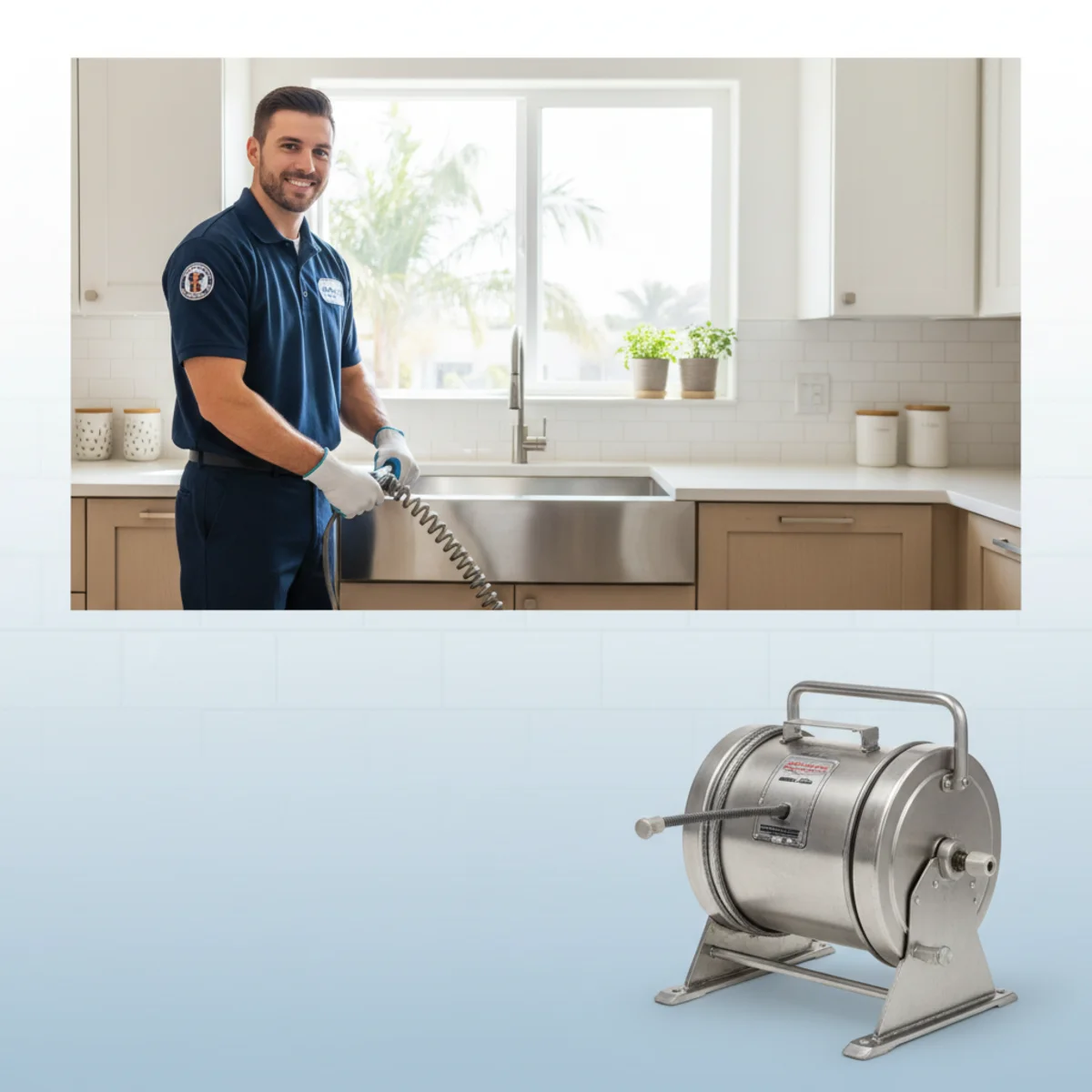
When a plunger fails, a hand auger — a drain snake — is the next step. It physically reaches the clog instead of pushing it.
Feed the cable into the drain until you hit resistance. Lock the cable, then crank the handle while pushing gently. You are trying to either break the clog apart or hook it and pull it out. When you feel the cable move freely, you have likely cleared it.
Pull the cable back slowly. Expect to bring up hair and sludge, so keep a bag and rags handy. Run water to confirm the line drains.
For a sink, it often helps to remove the P-trap (the curved pipe under the cabinet) and check it first. Put a bucket underneath, loosen the slip nuts by hand or with pliers, and clean it out. The clog is frequently right there. If you are not comfortable with this, our drain cleaning team handles it quickly.
Why you should avoid chemical drain cleaners
That jug of liquid drain cleaner is tempting, but it is one of the worst things you can pour down a pipe — especially in Bloomington's older homes.
Many houses here still have original galvanized steel or cast-iron drain lines. The harsh chemicals generate heat and corrode aging metal from the inside, weakening pipe that is already thinning with age. If the clog does not fully clear, you now have caustic liquid sitting in the line.
It is also a hazard for you. The next time you or a plumber opens that drain, trapped chemicals can splash back.
A cup plunger, a hand auger, and hot water clear most clogs without that risk. For stubborn or recurring blockages, professional hydro jetting scours the pipe walls clean with water pressure instead of chemicals.
Kitchen sink clogs vs. bathroom clogs
The cause of the clog tells you how to clear it. Kitchen and bathroom drains stop up for very different reasons.
Kitchen clogs are almost always grease, fat, and food. Cooking oil goes down warm and liquid, then cools and hardens into a sticky layer that traps everything after it. Coffee grounds, rice, and pasta swell and pack together. Hot water and soap help, but a snake is often needed.
Bathroom clogs are mostly hair bound up with soap scum. Bloomington's generally hard water makes that scum cling harder to pipe walls and stopper mechanisms. A bent wire or a plastic hair-snake tool pulls these out easily.
If the disposal side of a double kitchen sink is involved, the clog may sit past the disposal — a job for sink repair if the trap or branch line is the culprit.
When does a clog mean it is time to call a plumber?
Some signs tell you the problem is past the DIY stage. Call a pro when you see these:
- More than one drain is slow or backed up at the same time. That points to the main line, not a single fixture.
- A toilet gurgles or water rises in the tub when you run the sink or washer. Air is venting through the wrong place.
- The same drain clogs again within days or weeks of clearing it.
- Sewage smell or dark water comes back up a drain.
- You have already snaked it and the clog will not budge.
Repeat clogs in one spot usually mean buildup, a sag in the pipe, or root intrusion that a snake only punches a hole through. A camera inspection finds the real cause. If you are unsure, contact us — we will tell you honestly whether it is a quick clear or something deeper.
Frequently Asked Questions
Related Plumbing Services
Have a plumbing problem in Bloomington?
Don't let a small issue become an emergency. Call for fast, local, upfront-priced help.
Related Articles
All articlesDrain CleaningHow to Prevent Kitchen Sink Clogs
Most kitchen clogs are preventable. Here are the simple habits that keep your kitchen drain flowing — and the ones that cause backups.
Drain CleaningDoes Baking Soda and Vinegar Really Clean Drains?
The famous baking-soda-and-vinegar trick: helpful habit or kitchen myth? Here's the honest take from a plumber.
Drain CleaningWhy Your Drains Keep Clogging in Bloomington Homes
Clearing the same drain over and over? The clog isn't the problem — it's a symptom. Here's what's really going on in Bloomington pipes.