How Tree Roots Damage Sewer Lines in Bloomington, CA
The big shade trees around your older Bloomington home are an asset — until you learn what their roots are doing underground. Quietly, season after season, they are hunting for water. And the steadiest source of water and nutrients in your yard is your sewer line.
It starts small. A hairline crack or a loose joint lets a little moisture seep out. A root finds it, slips in through a gap thinner than a pencil, and starts to grow. Over time that single root becomes a dense mass that snags debris, slows your drains, and eventually cracks the pipe open.
By the time you notice slow drains or backups, the roots have usually been at work for a while. Here is how root intrusion happens, how to spot it, and how to stop it before it wrecks your sewer line.
Key Takeaways
- Tree roots seek the moisture and nutrients inside sewer lines and enter through small cracks and loose joints.
- Older clay and cast-iron sewer pipes are the most vulnerable because they have more joints and corrode over time.
- Early signs include slow drains, gurgling toilets, and recurring clogs in the main line.
- Hydro jetting cuts roots out and scours the pipe; a camera inspection confirms the extent of the damage.
- Badly cracked or collapsed lines need repair or replacement, since cleaning alone is only temporary.
Need a plumber in Bloomington, CA? We answer 24/7.
(207) 419-2600How do tree roots get into a sewer line?
Roots are opportunists. They grow toward moisture, and a sewer line carries a constant supply of exactly what they want. Where a pipe has a tiny crack, a loose joint, or a worn seal, a small amount of water vapor escapes into the soil.
That vapor is a signal. A root grows toward it, reaches the opening, and pushes through a gap far smaller than you would expect. Once inside, surrounded by water and nutrients, it thrives.
A single root quickly branches into a thick, fibrous mass that fills the pipe. As it grows, it widens the original crack and puts pressure on the joint, turning a small flaw into structural damage. The pipe rarely fails all at once — it is a slow takeover that begins with one thin root.
Why are older Bloomington homes more at risk?
Two things make established neighborhoods especially vulnerable: the trees and the pipes.
Older properties tend to have mature trees with large, far-reaching root systems. Those roots can extend well beyond the canopy, easily reaching a sewer line running across the yard to the street.
The pipe material matters just as much. Many older Bloomington homes still have clay or cast-iron sewer lines. Clay pipe comes in short sections with a joint every few feet, and every joint is a potential entry point. Cast iron corrodes from the inside over the decades, opening cracks for roots to exploit.
Add the clay and adobe soils common around here, which shift and settle with the seasons and stress pipe joints, and you have ideal conditions for root intrusion. When roots have taken hold, sewer line repair is often the lasting answer.
What are the warning signs of root intrusion?
Roots announce themselves gradually. The earlier you catch the signs, the less damage you are dealing with.
Watch for:
- Drains that have grown slow throughout the house, not just one fixture
- Gurgling sounds from toilets and drains
- Clogs in the main line that keep coming back after you clear them
- Sewage odors inside or in the yard
- An unusually green or fast-growing patch of lawn over the sewer line's path
That recurring main-line clog is a classic root symptom — the root mass catches everything that flows past, so the line blocks up again and again no matter how often you snake it. A persistent clog that will not stay clear is your cue to look deeper.
How are roots in a sewer line diagnosed?
You cannot fix what you cannot see, and digging blindly is expensive. The reliable way to confirm root intrusion is a camera inspection.
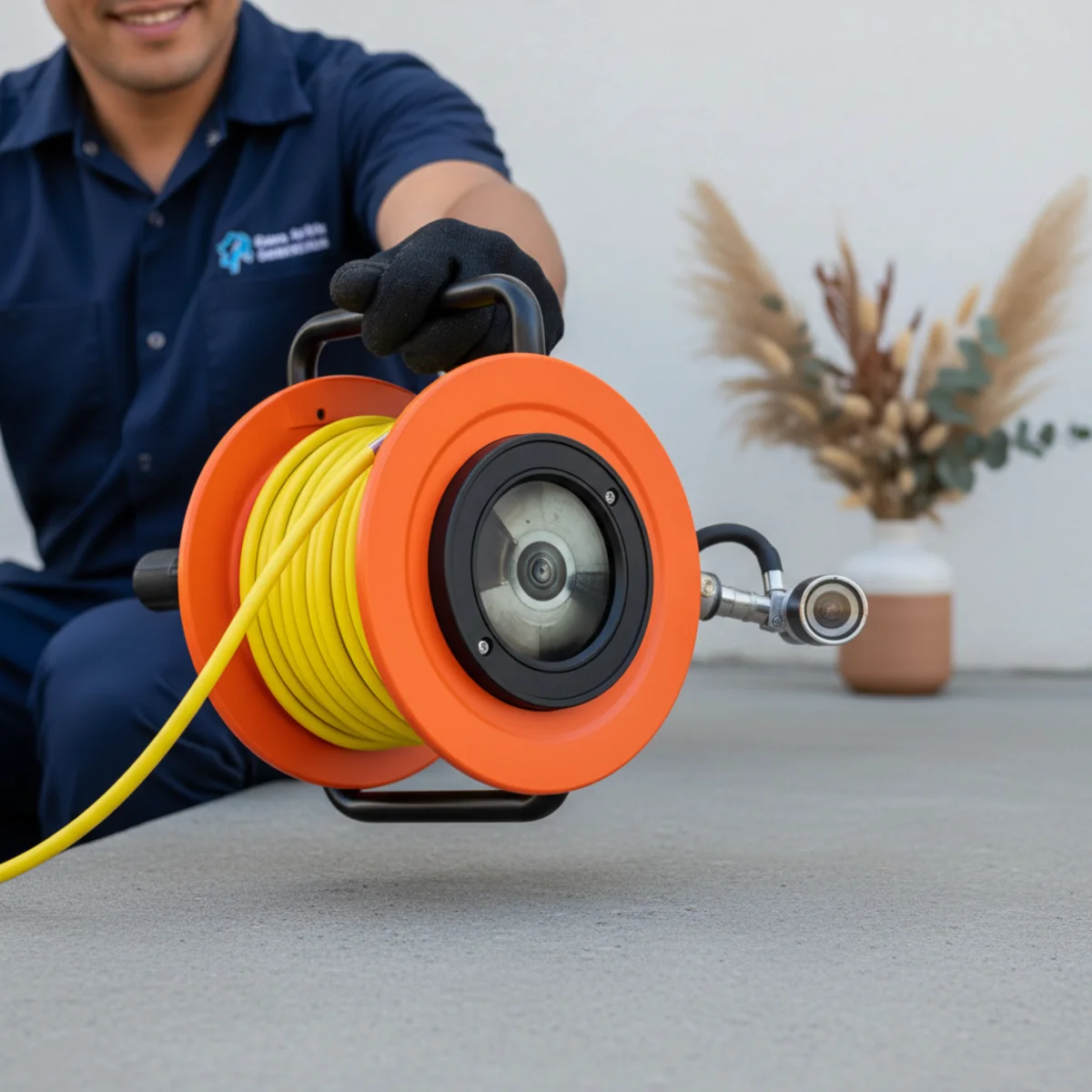
We feed a waterproof camera into the sewer line and watch the interior on a monitor in real time. The camera shows the roots directly, reveals how much of the pipe they have taken over, and pinpoints where they entered. It also shows whether the pipe is merely invaded or already cracked and crumbling.
That distinction drives the right decision. A line with roots but sound walls can be cleaned and maintained. A line that is fractured or collapsing needs repair. A sewer camera inspection gives you the facts before you spend a dollar on the fix, so the solution matches the actual damage.
How do you remove tree roots from a sewer line?
Once roots are confirmed, the goal is to clear them completely and restore the pipe to full flow. The most effective tool is hydro jetting.
A hydro jet sends water through the line at very high pressure, with a nozzle that cuts through the root mass and scours the pipe walls clean in every direction. It does more than punch a hole through the roots — it shears them out and flushes the debris away, leaving the pipe close to its original diameter.
A basic snake with a cutting head can cut a path through roots, but it leaves material behind and the roots return fast. Hydro jetting clears far more and buys you much more time before regrowth. If the camera shows the pipe is also cracked, jetting clears the line so a proper repair can follow.
Can you stop roots from coming back?
You cannot make roots stop growing, but you can keep them out of your line and slow their return.
- Schedule periodic hydro jetting to clear regrowth before it blocks the line
- Get a camera inspection if you have mature trees near the sewer path, even without symptoms
- Repair cracks and failing joints so roots lose their entry point
- For severely or repeatedly invaded clay or cast-iron lines, consider replacing the pipe with a jointless modern material that gives roots nowhere to enter
The most permanent fix is removing the entry points roots rely on. A pipe with no cracks and no open joints is far harder to invade. If you have big trees and an older home, do not wait for the first backup — contact us for an inspection and we will tell you honestly where your line stands.
Frequently Asked Questions
Related Plumbing Services
Have a plumbing problem in Bloomington?
Don't let a small issue become an emergency. Call for fast, local, upfront-priced help.
Related Articles
All articlesSewer LinesSigns You May Need Sewer Line Repair in Bloomington, CA
Multiple slow drains, yard odors, gurgling toilets — your sewer line is trying to warn you. Here's how to read the signs before it backs up.
Sewer LinesMain Sewer Line Clog Warning Signs
When the main line clogs, the whole house feels it. Here's how to recognize the warning signs before it backs up.
Sewer LinesWhat to Do If Your Sewer Line Backs Up
Sewage coming up a drain is an emergency. Here's exactly what to do — and what to avoid — the moment a sewer line backs up.