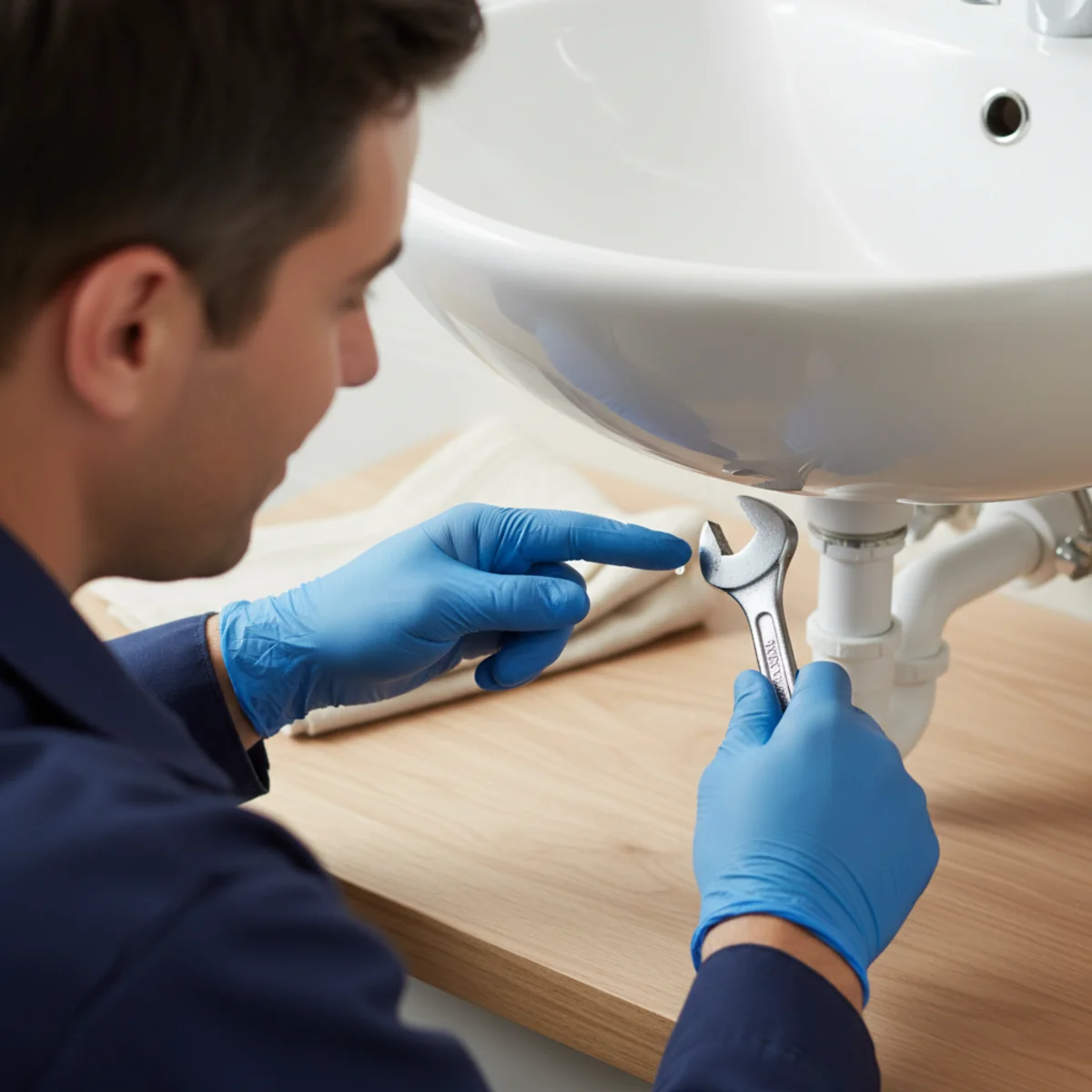
Bloomington is not exactly known for hard freezes. But every few winters a cold snap rolls through, temperatures drop overnight, and an exposed pipe in a garage, crawl space, or exterior wall freezes solid.
You turn on a faucet and barely a trickle comes out. Or worse, you hear water running somewhere it should not be. A frozen pipe is bad. A frozen pipe that bursts can flood a room before you have your shoes on.
Frozen water expands, and that pressure can split a pipe wide open. This guide covers what to do the moment you suspect a frozen pipe, how to thaw it safely, what to do if one bursts, and how to keep it from happening again.
Key Takeaways
- If a faucet barely trickles in cold weather, suspect a frozen pipe and act before it bursts.
- Know where your main water shut-off is — it is your first move if a pipe bursts.
- Thaw frozen pipes gently with warm air or towels; never use an open flame.
- Keep the faucet open while thawing so melting water has somewhere to go.
- Exposed pipes in garages, crawl spaces, and exterior walls are the most at risk here.
Need a plumber in Bloomington, CA? We answer 24/7.
(207) 419-2600How do I know if a pipe is frozen?
The clues show up at the faucet first. On a cold morning, if you turn on a tap and only a thin trickle or nothing comes out, a pipe feeding it is likely frozen.
Other signs:
- Frost or condensation visible on an exposed pipe in the garage, under a sink, or in a crawl space.
- A pipe that feels ice-cold and looks slightly bulged.
- One fixture works fine while another on the same wall is dead — the frozen section is between them.
The most vulnerable spots in Bloomington homes are pipes that run through unheated areas: the garage, exterior walls facing north, crawl spaces, and any hose bib or irrigation line left charged outside.
Act while it is still just frozen, not burst. A frozen pipe is a thawing job. A burst one is an emergency plumbing job, and the difference is often a single hour.
What should I do the moment I suspect a frozen pipe?
Move quickly but calmly. The goal is to relieve pressure and get water moving before ice splits the pipe.
First, open the faucet that the frozen pipe feeds — both hot and cold handles. This does two things: it relieves the building pressure that causes bursts, and it gives melting ice a path to flow out as you thaw.
Second, find your main water shut-off valve and make sure you can turn it. In many homes it is near where the line enters, at the front of the house, in the garage, or at the meter by the street. If the pipe bursts while you work, you will want to kill the water fast.
Third, locate the frozen section by feeling along accessible pipe for the coldest spot. Then start thawing. If you cannot find or reach the frozen area, or it is inside a wall, call a plumber before it lets go.
How to safely thaw a frozen pipe
Once you have the faucet open and you have found the frozen length, apply gentle heat. Patience beats intensity here.
Safe ways to thaw:
- Wrap the pipe in warm, wet towels and re-warm them as they cool.
- Aim a hair dryer back and forth along the pipe, starting nearest the faucet and working toward the cold spot.
- Set up a space heater a safe distance away, or use a heating pad wrapped around the pipe.
Always work from the faucet end inward so melt water can escape and you do not trap steam behind ice.
Never use a blowtorch, propane heater, or any open flame on a pipe. It is a fire risk, it can burst the pipe from sudden steam pressure, and it can scorch the wall. Keep the faucet running as it thaws — restored flow tells you it worked. If the pipe is hidden in a wall or ceiling, that is the point to stop and call a pro.
What to do if a pipe bursts
A burst pipe is the scenario you are racing to prevent, but if it happens, fast action limits the damage.
Shut off the water immediately at the main valve. This is the single most important step, which is why finding that valve before trouble matters so much. Turn it clockwise until it stops.
Then:
- Open faucets to drain the remaining water in the lines and relieve pressure.
- Move belongings, electronics, and rugs away from the water.
- If water is near outlets, a panel, or fixtures, shut off the electricity to that area at the breaker.
- Soak up and contain what you can to slow the spread.
Now call for help. A burst pipe needs prompt pipe repair, and we are available around the clock for exactly this. The water that escapes can also lead to staining, warping, and mold, so getting the leak stopped and the area dried out quickly protects far more than the pipe itself.
How to prevent frozen pipes in Bloomington winters
Because freezes here are occasional, it is easy to get caught off guard. A little prep before a forecast cold snap goes a long way.
- Insulate exposed pipes in the garage, crawl space, and along exterior walls with foam pipe sleeves.
- Disconnect garden hoses and drain or cover outdoor hose bibs and irrigation lines.
- On the coldest nights, let a faucet drip slightly. Moving water resists freezing.
- Open cabinet doors under sinks on exterior walls so household heat reaches the pipes.
- Keep the garage door closed if water lines run through it.
Older Bloomington homes sometimes have water lines in spots that were never meant for cold, and a single repeat freeze can fatigue aging pipe. If you have had a freeze before in the same place, or your pipes are old galvanized steel, it may be worth talking about insulation or repiping before next winter rather than after the next burst.
Frequently Asked Questions
Related Plumbing Services
Have a plumbing problem in Bloomington?
Don't let a small issue become an emergency. Call for fast, local, upfront-priced help.
Related Articles
All articles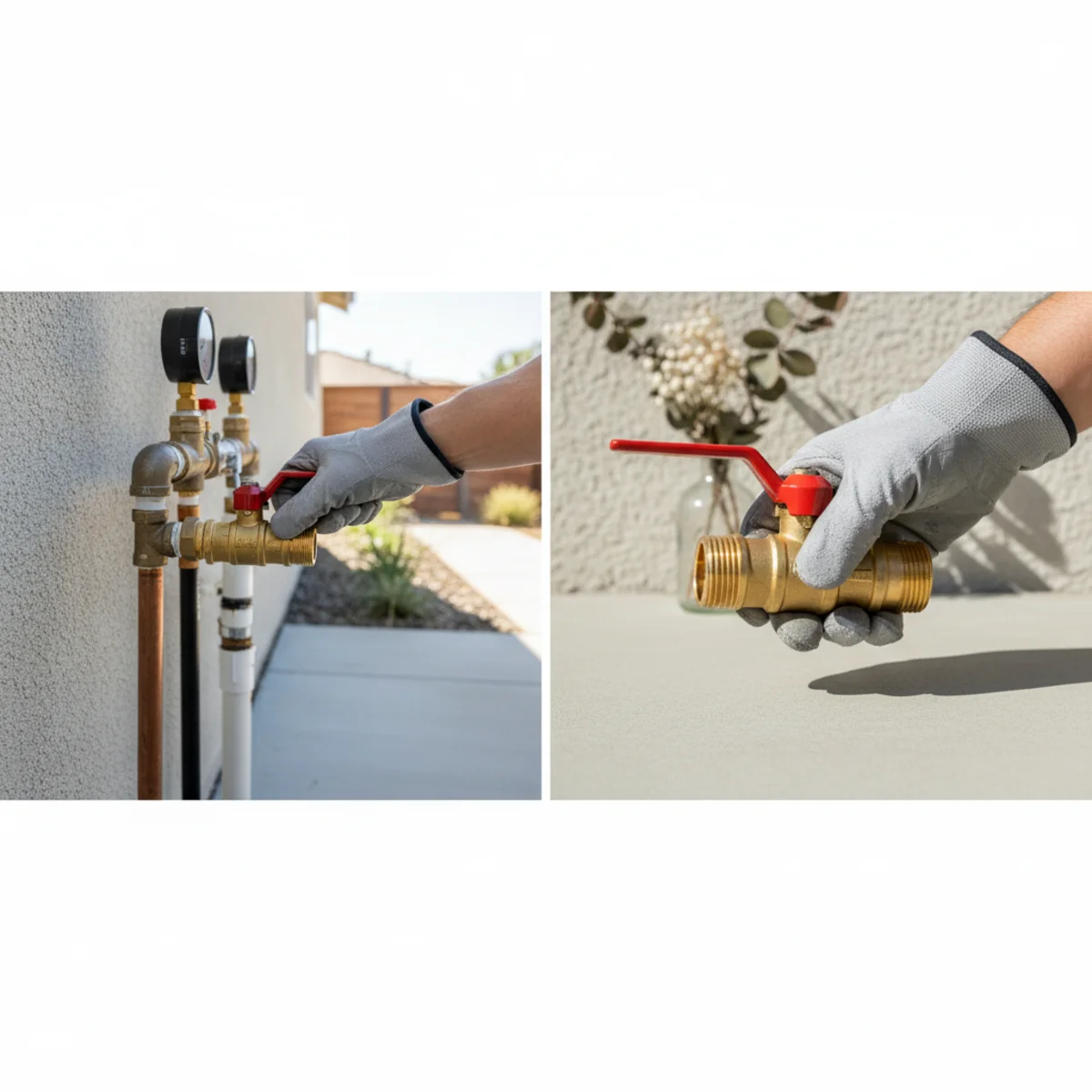 Emergency Plumbing
How to Shut Off Water During a Plumbing Emergency
The single most useful thing you can know in a plumbing emergency: where your shut-off valves are. Here's how to find and use them.
Emergency PlumbingEmergency Plumbing Problems That Cannot Wait
Not every plumbing issue is an emergency — but these can't wait. Here's how to tell the difference and protect your home.
Emergency PlumbingWhat to Do When You Need an Emergency Plumber in Bloomington, CA
When water is spreading and the clock is ticking, a few quick steps can save you thousands. Here's your Bloomington emergency plumbing playbook.