How to Shut Off Water During a Plumbing Emergency
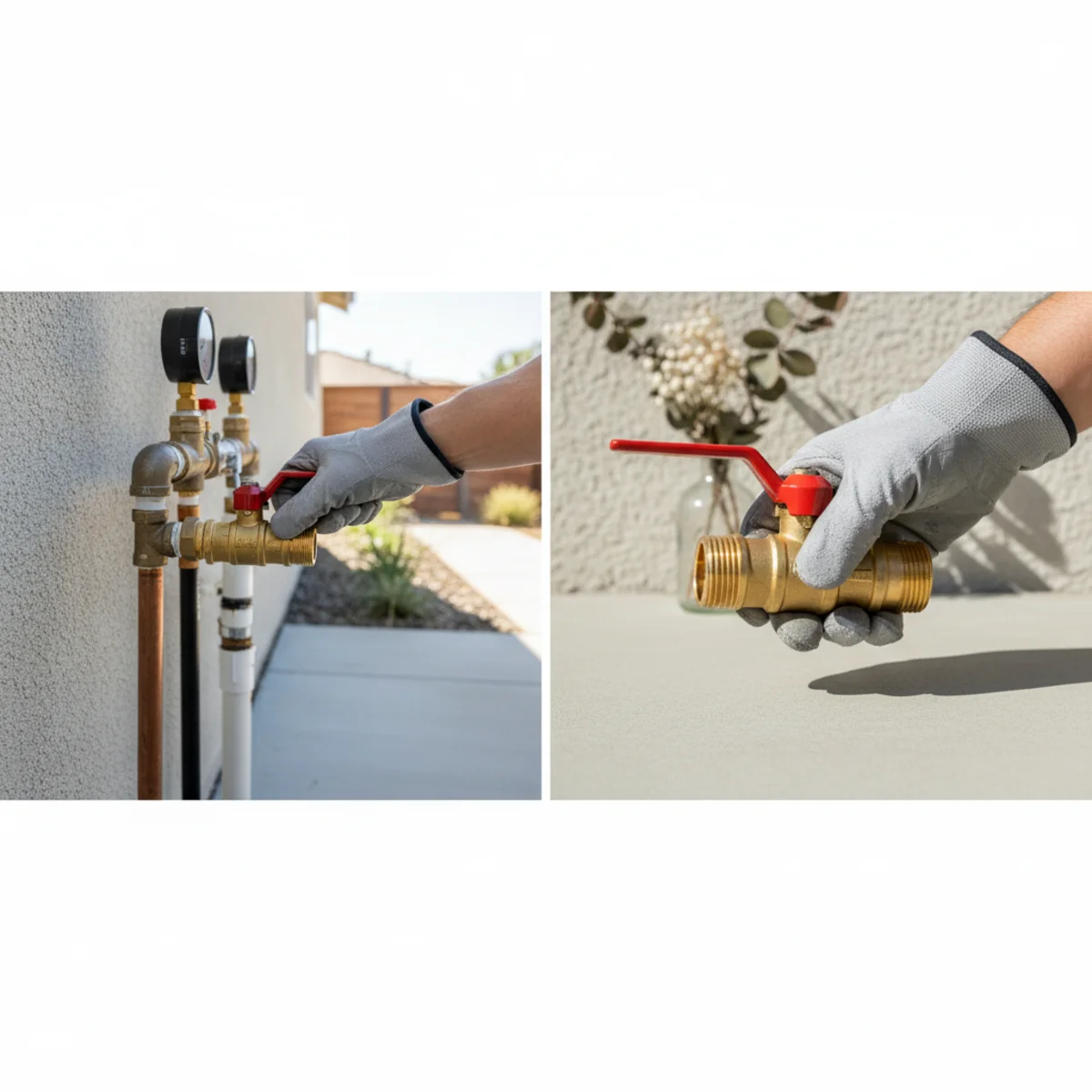
A pipe lets go under the sink, or the water heater starts pouring across the garage floor. In that moment, the single most valuable thing you can know is where your water shut-off valves are — and how to turn them.
Most people have never touched theirs. So when water is spreading and panic sets in, they waste precious minutes hunting for a valve while gallons soak the subfloor. Every minute counts when water is loose in a house.
The good news: shutting off water is simple once you know where to look. Spend ten minutes today finding your valves, and you will save yourself thousands in damage someday. Here is exactly how.
Key Takeaways
- Most fixtures have a local shut-off valve right beneath or behind them — use it to stop a single leak.
- Your home's main shut-off valve stops water to the whole house and is usually near where the line enters or by the water heater.
- There is also a curb/meter valve at the street, but it often needs a special key and is a backup option.
- Turn shut-off valves clockwise to close (righty-tighty); turn slowly to avoid stressing old fittings.
- Find and test your valves before an emergency — a stuck valve discovered mid-flood is too late.
Need a plumber in Bloomington, CA? We answer 24/7.
(207) 419-2600Where is the shut-off valve for a single fixture?
For most leaks at a sink, toilet, or appliance, you do not need to kill water to the whole house. There is a local shut-off — called a stop valve — right there.
- Under a sink: look at the back of the cabinet for one or two small oval or round handles on the supply lines
- At a toilet: it is on the wall or floor behind the bowl, where the supply line meets the tank
- At the dishwasher or washing machine: behind or beside the unit
Turn the handle clockwise until it stops. That isolates just that fixture so you can deal with a pipe repair without shutting off the rest of the home.
Where is the main water shut-off?
When a leak is large, hidden, or you simply cannot find a local valve, go to the main shut-off. It stops water to the entire house.
In Bloomington homes, look in a few common spots:
- In the garage, often near the water heater
- On an exterior wall, where the main line enters the house, frequently on the side facing the street
- In an access panel or a box low on the wall
The valve is either a round wheel (turn clockwise) or a lever (turn it a quarter-turn so it sits crosswise to the pipe). Knowing this one valve is the heart of handling any emergency plumbing situation.
What about the valve at the street?
Every home also has a shut-off at the water meter, usually in a covered box near the curb or sidewalk. This is the valve that controls service from West Valley Water District's line into your property.
It is a backup. Use it if your main house valve is broken, frozen open, or you cannot reach it. The catch: many of these need a special meter key (a long T-shaped tool), and a few are tight enough that forcing them risks damage.
If the meter valve is your only option and it will not budge, do not wrench on it. Call for help with the water line rather than break the utility's connection.
Which way do I turn the valve?
The old rule holds for round-wheel valves: righty-tighty, lefty-loosey. Turn clockwise to shut the water off, counterclockwise to open it.
Lever-style valves are even simpler. When the handle lines up with the pipe, water flows. Turn it a quarter-turn so it sits across the pipe, and the water is off. These quarter-turn valves are the most reliable kind, which is why plumbers often install them when replacing old stops.
Turn slowly. In older homes around Bloomington 92316, valves that have not moved in years can be stiff, and the pipe behind them may be brittle galvanized. Gentle, steady pressure is safer than a hard yank that could crack a fragile fitting and turn one leak into two. If a valve will not move with reasonable effort, stop and try the next one upstream rather than forcing it.
What if the valve is stuck or won't close?
Old shut-off valves are notorious for seizing up from years of mineral buildup — our generally hard water leaves scale on everything it touches. A valve that will not turn, or that turns but does not stop the flow, is a real problem in an emergency.
If a fixture valve is stuck, move up to the main. If the main is stuck, the meter valve at the street is your last line of defense.
A valve that fails when you need it is worth replacing on a calm day, not a flood day. Adding or upgrading reliable shut-offs is straightforward work, and it is something to flag during any residential plumbing visit.
Find your valves before you need them
The worst time to learn plumbing geography is during a flood. Take ten minutes this week:
- Locate the stop valve under each sink and behind each toilet
- Find your main shut-off and make sure the path to it is clear
- Locate the meter box near the curb and confirm you have a meter key
- Gently test that each valve turns — then return it to open
- Show everyone in the house where the main valve is
Label the main valve if it helps. When something bursts at midnight, that bit of preparation turns panic into a thirty-second fix. If you would rather have a pro verify and test your valves, just contact us.
Frequently Asked Questions
Related Plumbing Services
Have a plumbing problem in Bloomington?
Don't let a small issue become an emergency. Call for fast, local, upfront-priced help.
Related Articles
All articles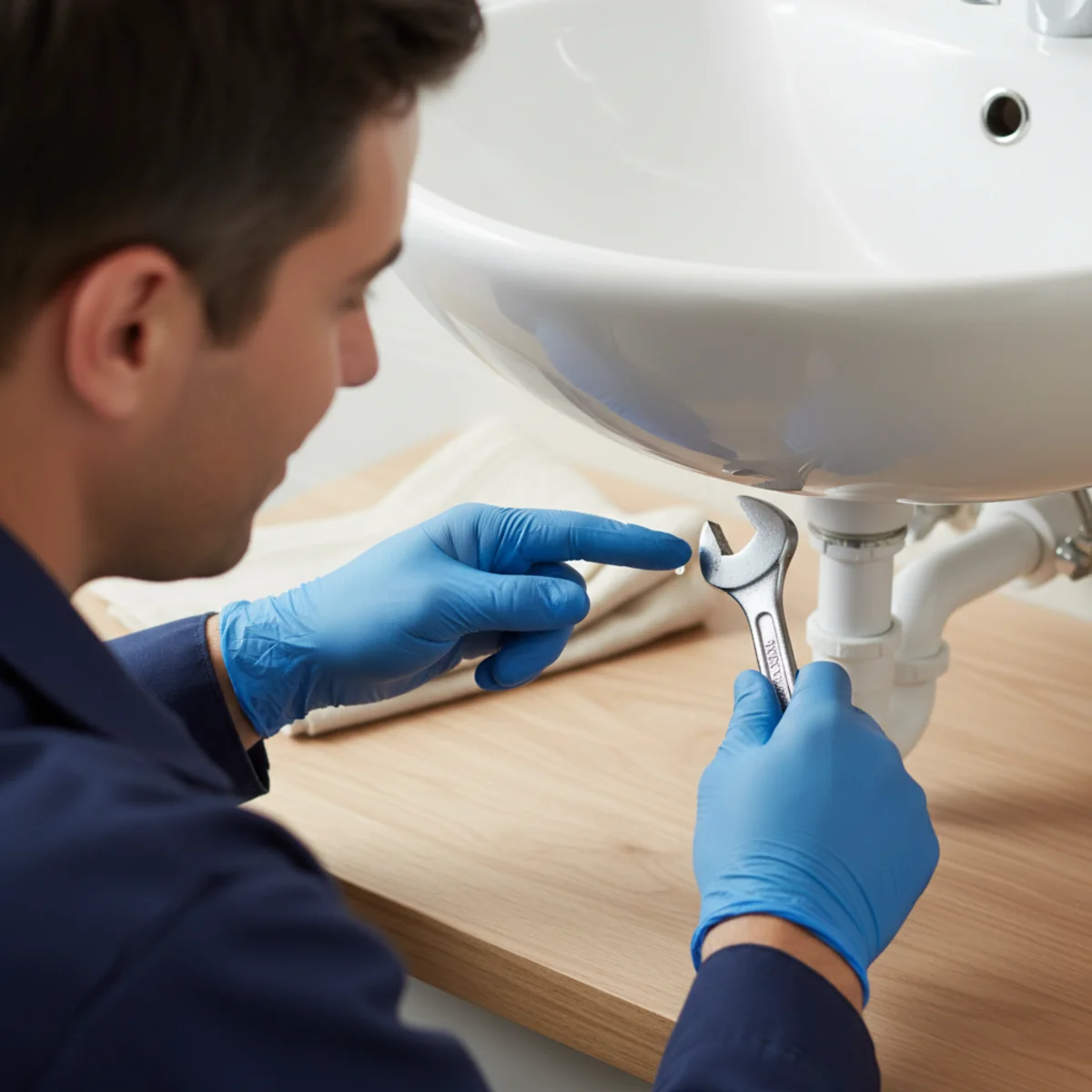 Emergency Plumbing
What to Do When You Need an Emergency Plumber in Bloomington, CA
When water is spreading and the clock is ticking, a few quick steps can save you thousands. Here's your Bloomington emergency plumbing playbook.
Emergency PlumbingEmergency Plumbing Problems That Cannot Wait
Not every plumbing issue is an emergency — but these can't wait. Here's how to tell the difference and protect your home.
Emergency PlumbingFrozen or Burst Pipe? What to Do First
A rare cold snap can freeze exposed pipes even here. Here's what to do first if a pipe freezes or bursts.