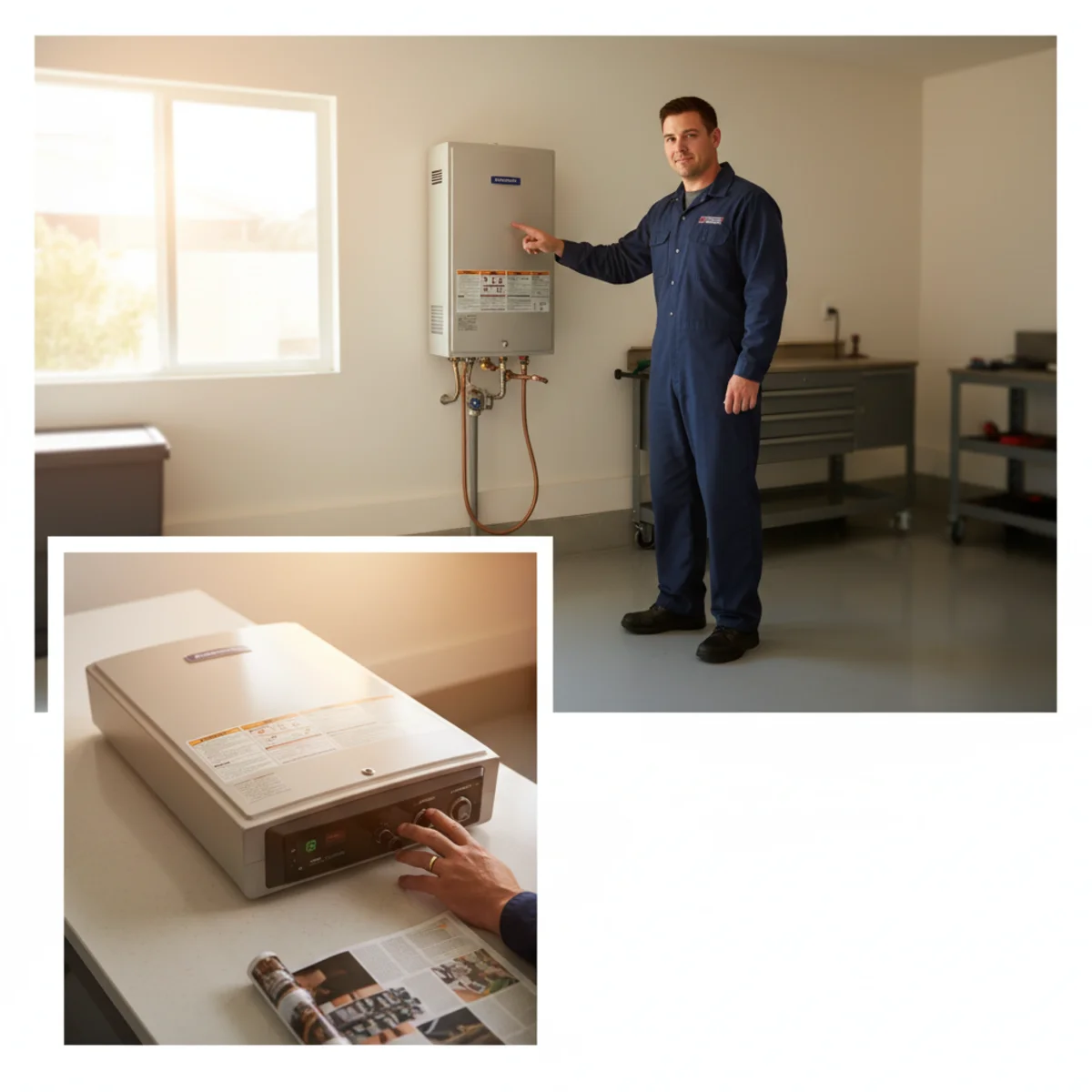
Your water heater works every single day, and almost always out of sight in a garage or closet. So it's easy to forget it has a lifespan, right up until the morning the hot water runs out or you find a puddle on the floor.
Knowing how much life your heater has left changes how you plan. A tank near the end of its run is a flood waiting to happen, and replacing it on your schedule is far cheaper than an emergency swap after it fails.
Here's how long water heaters typically last, what shortens that life in our hard-water area, and the warning signs that yours is near the end. A little awareness now can save you a cold shower and a soaked floor later.
Key Takeaways
- Traditional tank water heaters typically last around 8 to 12 years; tankless units often last longer.
- Bloomington's hard water builds sediment that shortens a heater's life faster than the averages suggest.
- Rusty water, popping sounds, lukewarm output, and any leaking are signs the end is near.
- Flushing the tank yearly is the best way to extend a water heater's working life here.
- Replacing a failing heater on your schedule beats an emergency replacement after a tank ruptures.
Need a plumber in Bloomington, CA? We answer 24/7.
(207) 419-2600How long does a water heater usually last?
For a standard tank-style water heater, the typical working life is roughly 8 to 12 years. Plenty last a bit longer with good care, and some fail sooner with none.
Tankless water heaters generally last longer, often well beyond a tank's lifespan, because they don't store water in a tank that slowly corrodes. They still need maintenance, especially descaling in a hard-water area, but they tend to outlast their tank-style cousins.
A few things move a heater along the range:
- Water hardness, which is the big one here
- How often it's flushed and maintained
- Water pressure and temperature settings
- The quality of the original installation
Think of these as estimates, not guarantees. The actual number depends heavily on the water running through it, and in Bloomington that water is working against the tank. If you're not sure how old yours is, the manufacture date is usually encoded in the serial number on the label.
Why does hard water shorten a water heater's life here?
Bloomington's water is generally hard, and that's the single biggest factor pushing local heaters toward the shorter end of their lifespan.
As hard water heats, the dissolved minerals drop out and settle to the bottom of the tank as sediment. That sediment causes real damage:
- It forms an insulating layer the burner must heat through, making the unit work harder and run hotter
- It accelerates corrosion of the tank and the heating elements
- It creates hot spots that stress and weaken the steel
- It produces the popping and rumbling sounds you hear from an aging tank
The harder the unit has to work, the faster it wears out. This is why two identical heaters can have very different lifespans, one in a soft-water area and one here. A water softener installation reduces the mineral load reaching the tank and is one of the best investments for getting full life out of a heater in this area.
What are the warning signs a water heater is failing?
Most heaters give you signals before they quit. Watch and listen for these:
- Rusty or discolored hot water, which points to corrosion inside the tank
- A metallic taste or smell in the hot water
- Popping, rumbling, or banging sounds from sediment hardening on the bottom
- Water that no longer gets as hot, or runs out faster than it used to
- Inconsistent temperatures, swinging between hot and cold
- Any water pooling around the base of the tank
That last one is the most urgent. A leaking tank rarely seals back up. It means the steel has corroded through, and a slow leak today can become a sudden rupture and a flooded room. If your heater is past ten years and showing any of these, it's time to plan a replacement rather than wait. Our water heater repair team can tell you honestly whether yours is worth fixing or replacing.
How can I make my water heater last longer?
You can't change the water hardness without treatment, but you can do a lot to stretch your heater's life. The most valuable habit is flushing the tank.
- Flush the tank once a year to clear sediment before it hardens. In our hard-water area, this matters more than almost anything else.
- Test the temperature and pressure relief valve yearly to confirm it works.
- Check the anode rod every few years. This sacrificial rod corrodes so the tank doesn't, and replacing a spent one can add years.
- Set the thermostat to a reasonable temperature. Running it scalding hot speeds up wear and wastes energy.
- Keep the area around the unit clear and dry so you'll spot a leak early.
Flushing is something many homeowners can do, but if you'd rather not, we fold it into routine plumbing maintenance visits. Either way, regular attention is what separates a heater that lasts a dozen years from one that quits in six.
Should I repair or replace an aging water heater?
When a heater acts up, the repair-or-replace question comes down to age, cost, and the type of problem.
Repair often makes sense when:
- The unit is well within its expected lifespan
- The problem is a part, like a thermostat, heating element, or relief valve
- There's no sign of tank corrosion or leaking
Replacement is usually the smarter call when:
- The heater is past 10 years and giving multiple warning signs
- The tank itself is leaking, which a repair can't fix
- Repair costs are climbing toward the price of a new, more efficient unit
Replacing on your own timeline lets you choose the right size and type without pressure. Many homeowners use the moment to consider efficiency. We handle straightforward water heater installation and can walk you through whether a tank or tankless model fits your home and budget. The point is to decide before the tank decides for you.
Is a tankless water heater worth it for a longer lifespan?
Tankless units appeal to a lot of homeowners precisely because they tend to last longer than tank models, along with delivering hot water on demand and saving space.
The longevity comes from the design. There's no tank of standing water slowly corroding from the inside. That said, a tankless unit isn't maintenance-free, especially here.
- In a hard-water area, the heat exchanger scales up and must be descaled periodically to keep working efficiently
- Skipping that maintenance can cut into the lifespan advantage quickly
- Pairing one with a water softener protects the heat exchanger and is strongly worth considering
If you're weighing the switch, factor in the higher upfront cost against the longer life and lower standby energy use. Our tankless water heater service covers installation and the descaling these systems need in Bloomington. For many homes the longer lifespan makes it worth a serious look, as long as you commit to the maintenance.
Frequently Asked Questions
Related Plumbing Services
Have a plumbing problem in Bloomington?
Don't let a small issue become an emergency. Call for fast, local, upfront-priced help.
Related Articles
All articlesWater HeatersWhat Causes Water Heater Leaks?
Water around your heater? Some leaks are simple repairs; others mean the tank is done. Here's how to tell what's causing it.
Water HeatersHow Often Should You Flush a Water Heater?
It's one of the highest-value maintenance tasks you can do — especially with Bloomington's hard water. Here's how often to flush your water heater.
Water HeatersWhy Your Water Heater Is Not Producing Hot Water
A cold shower is a bad way to start the day. Here are the usual reasons a water heater stops making hot water — and what to check.