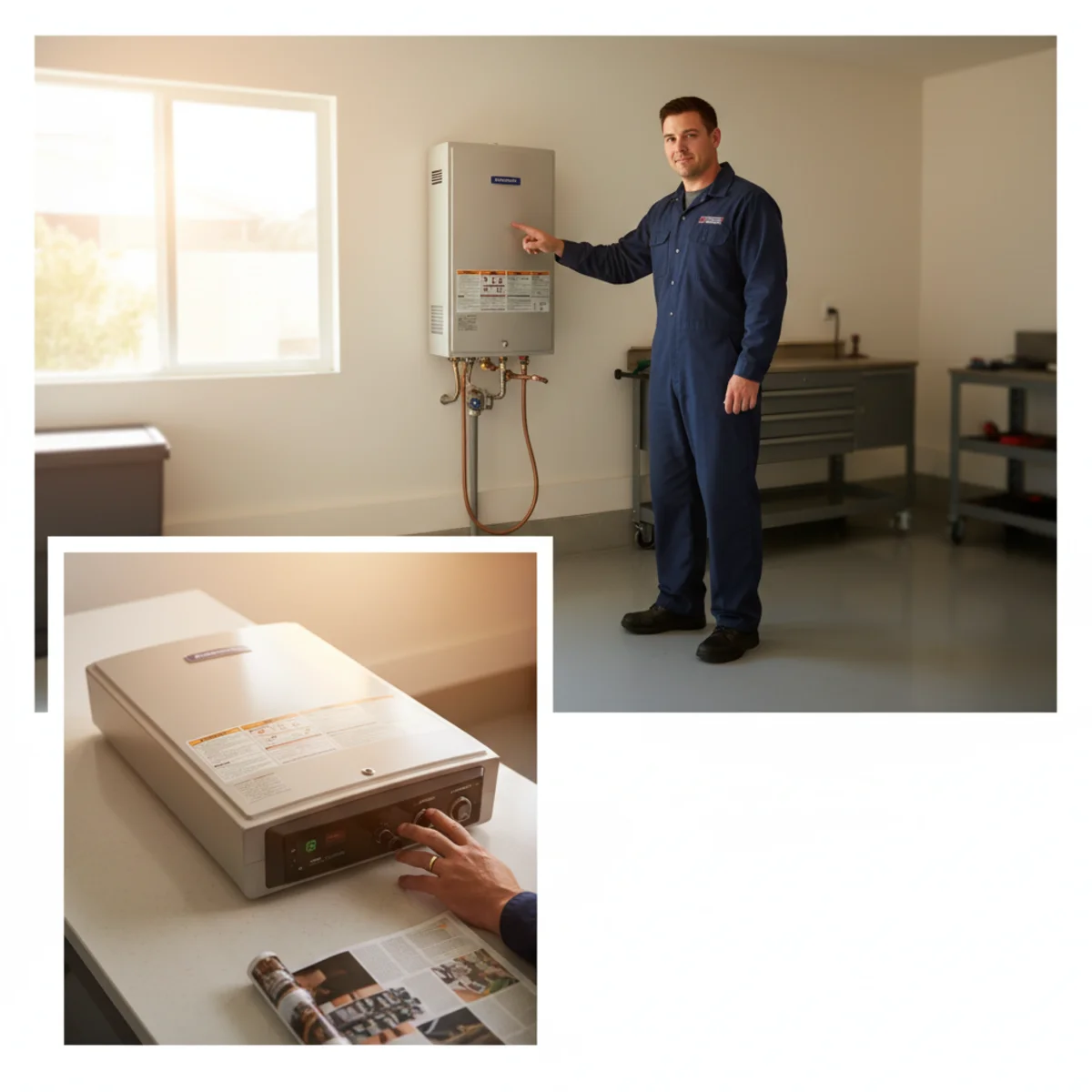
There's nothing like stepping into the shower expecting warmth and getting an icy blast instead. A water heater that stops making hot water turns the simplest morning routine into a problem you can't ignore.
The frustrating part is that "no hot water" has several possible causes, and they range from a five-minute fix to a unit that's reached the end of its life. A tripped breaker is one thing. A failed heating element, a bad thermostat, or a tank packed with sediment is another.
Before you assume the worst, there are a few things worth checking. This guide walks through the usual reasons a water heater stops producing hot water, what's safe to look at yourself, and when it's time to call for water heater repair.
Key Takeaways
- No hot water at all usually points to power (electric) or the pilot, igniter, or gas supply (gas).
- Lukewarm or quickly-depleted hot water often means a failed element, bad thermostat, or heavy sediment buildup.
- Bloomington's hard water accelerates sediment, which insulates the burner and cuts efficiency and capacity.
- Always cut power or gas before inspecting a water heater, and never relight a pilot if you smell gas.
- If the tank itself is leaking or well past 10 to 12 years old, replacement usually beats repeated repairs.
Need a plumber in Bloomington, CA? We answer 24/7.
(207) 419-2600Is it an electric or gas water heater?
The first step is knowing which type you have, because the troubleshooting differs.
An electric water heater runs on 240-volt power and uses heating elements inside the tank, controlled by thermostats. If it stops heating, the cause is usually electrical: a tripped breaker, a failed element, or a bad thermostat.
A gas water heater burns natural gas, lit by a pilot light or an electronic igniter, with a thermocouple or sensor confirming the flame. When a gas unit stops heating, the issue is often a pilot that won't stay lit, a faulty thermocouple, an igniter problem, or a gas-supply interruption.
Look for a gas line and a burner access panel near the bottom (gas) versus a power cable and access panels on the side of the tank (electric). Once you know the type, the likely causes narrow down quickly.
Why is there no hot water at all?
When the water is stone cold, something has stopped the heat source entirely.
On an electric unit, start at the electrical panel. A tripped breaker is a common and easy fix. If the breaker keeps tripping, stop and call a pro, because that points to a failing element or a wiring fault. Some units also have a high-temperature reset button near the upper thermostat that can trip.
On a gas unit, check whether the pilot light is lit (if it has a standing pilot). A pilot that won't stay lit usually means a worn thermocouple or a dirty pilot assembly. Also confirm other gas appliances are working, which tells you the gas supply is fine.
Important: if you ever smell gas, do not try to relight anything. Leave the home and call your gas utility, then a plumber. Gas issues are not DIY territory.
Why is the water only lukewarm or running out fast?
If you get some warmth but it's weak or disappears quickly, the heater is working but not fully.
Common causes include:
- A failed lower heating element (electric), which leaves you with a small amount of warm water that runs out fast.
- A thermostat set too low, or one that's failing and not calling for enough heat.
- Heavy sediment in the bottom of the tank, which insulates the burner or element and steals heating capacity.
- A worn dip tube, which lets incoming cold water mix with the hot at the top of the tank.
- A unit that's simply undersized for the household's demand.
In our area, sediment is a frequent offender. As scale builds on the bottom, the burner has to heat through a layer of mineral, and you feel it as less hot water and higher energy use.
How does Bloomington's hard water affect my water heater?
Our water here is generally hard, and hard water is tough on water heaters. Verify the specifics against the latest West Valley Water District water-quality report, but the effect is consistent: dissolved minerals settle out as the water heats.
That sediment collects at the bottom of a tank heater, right where the gas burner does its work. The layer acts like insulation, forcing the burner to run longer and hotter to heat the water above it. You get less hot water, higher bills, and often a popping or rumbling sound as water bubbles up through the sediment.
Over time, that extra heat stress shortens the tank's life. This is exactly why flushing the tank matters, and why many homeowners pair a heater with a water softener to protect it. A softener also helps tankless units, which are especially sensitive to scale.
What can I safely check before calling a plumber?
A few safe checks may save you a service call, as long as you respect the basics.
- Confirm the breaker hasn't tripped (electric) and reset it once. If it trips again, stop.
- Check the thermostat setting; around 120 degrees is typical for safety and efficiency.
- For a gas unit with a standing pilot, see whether the pilot is lit, but never relight if you smell gas.
- Listen for popping or rumbling, which suggests sediment.
- Look around the base for any sign of water, which suggests a leak.
Always cut the power at the breaker or turn the gas control to "off" before removing any access panels. Heating elements, thermostats, gas valves, and wiring carry real risk. If the simple checks don't restore hot water, that's the line, call for professional repair rather than digging deeper yourself.
When should I repair versus replace the unit?
Not every water heater is worth fixing. The decision usually comes down to age, condition, and the nature of the failure.
Repair makes sense when the unit is under about 8 to 10 years old and the problem is a discrete part: a thermostat, an element, a thermocouple, or an igniter. These are common, affordable fixes that restore years of service.
Replacement is the smarter move when the tank itself is leaking (that almost always means the tank has corroded through), when the unit is past 10 to 12 years old, or when you're facing repeated breakdowns. At that point, a new unit and a fresh warranty cost less over time than chasing failures.
If you're weighing it, we'll give you an honest assessment and an upfront price on both paths, including options for a high-efficiency tank or a tankless system through our installation service.
Frequently Asked Questions
Related Plumbing Services
Have a plumbing problem in Bloomington?
Don't let a small issue become an emergency. Call for fast, local, upfront-priced help.
Related Articles
All articlesWater HeatersWhat Causes Water Heater Leaks?
Water around your heater? Some leaks are simple repairs; others mean the tank is done. Here's how to tell what's causing it.
Water HeatersHow Long Do Water Heaters Last?
Wondering how much life your water heater has left? Here's how long they typically last and what shortens that in our hard-water area.
Water HeatersTankless vs Traditional Water Heaters for Bloomington Homes
Endless hot water and lower bills, or lower upfront cost and simplicity? Here's how tankless and tank water heaters compare for Bloomington homes.