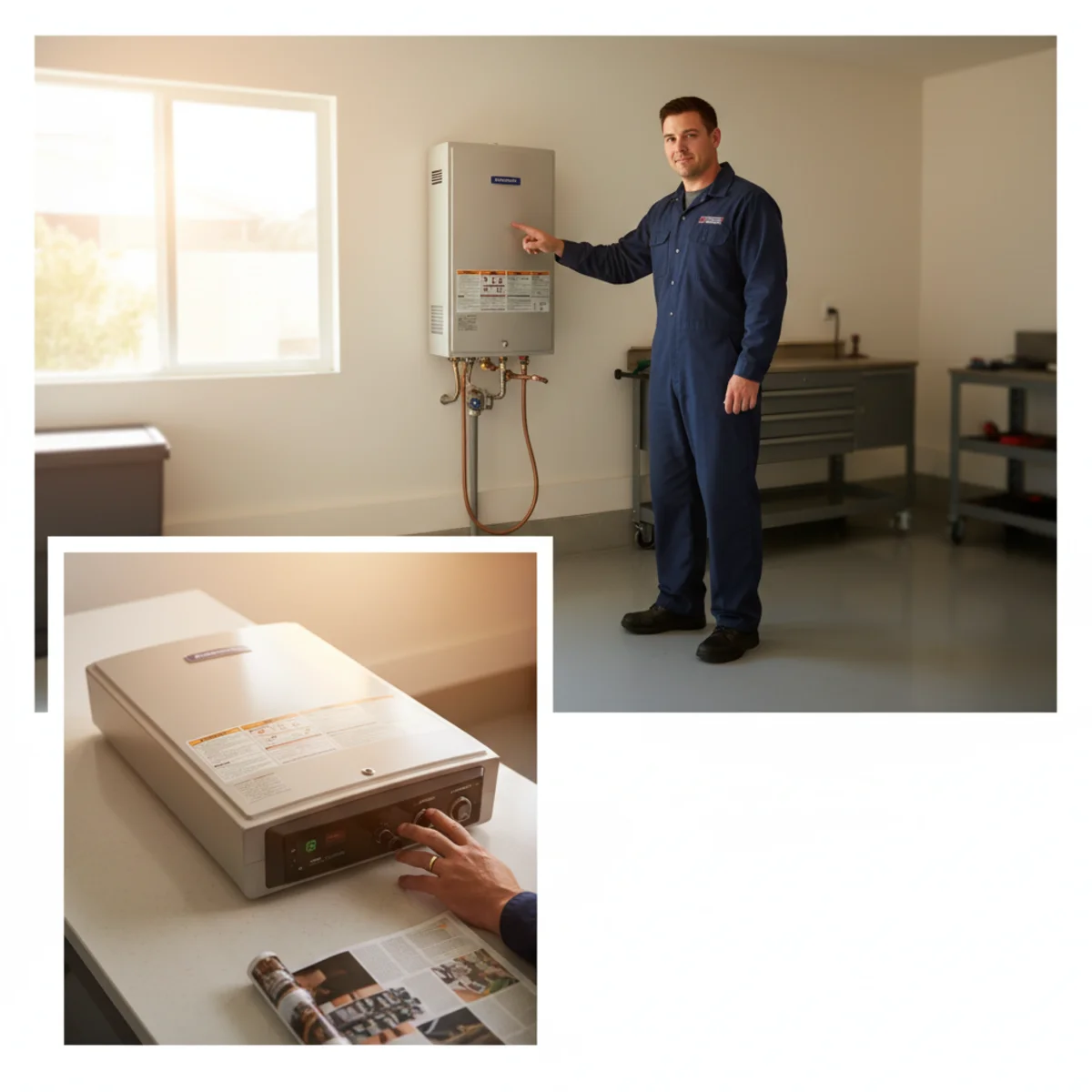
Your water heater is one of the hardest-working appliances in the house, and one of the most neglected. Most people never touch it until the day it stops making hot water or starts leaking.
Here in Bloomington, that neglect costs you faster than it would elsewhere. Our water is generally hard, so minerals constantly settle out and pile up at the bottom of the tank as sediment. Left alone, that layer steals efficiency, shortens the unit's life, and can leave you with lukewarm showers and a rumbling tank.
Flushing the heater clears that sediment out. It's one of the highest-value maintenance tasks a homeowner can do, and it's not complicated. Here's how often to flush, why it matters so much locally, and when to let a pro handle it.
Key Takeaways
- Flush a tank water heater about once a year; in hard-water areas like Bloomington, consider every 6 to 12 months.
- Sediment buildup lowers efficiency, reduces hot-water capacity, and shortens the life of the tank.
- A popping or rumbling sound and slow recovery are classic signs the tank is overdue for a flush.
- Tankless units don't store water but still need descaling on a regular schedule in hard water.
- Flushing is doable for many homeowners, but a maintenance visit handles it safely and catches other issues.
Need a plumber in Bloomington, CA? We answer 24/7.
(207) 419-2600How often should I flush my water heater?
The standard advice is to flush a tank-style water heater once a year. That keeps sediment from accumulating to the point where it hurts performance.
But the right interval depends on your water, and Bloomington's water is generally hard. Verify the current level against the latest West Valley Water District water-quality report. In harder water, minerals drop out faster, so sediment builds quicker. For many homes here, flushing every 6 to 12 months is a better target than a strict once-a-year schedule.
A few factors push you toward the shorter end: very hard water, heavy hot-water use in a busy household, or an older tank that's already seen some buildup. If you've never flushed yours and it's a few years old, now is a good time to start. Making it part of routine plumbing maintenance keeps it from slipping your mind.
Why does flushing matter so much?
Sediment isn't harmless. As minerals settle to the bottom of the tank, they form an insulating layer right where the gas burner heats the water (or around the lower element on an electric unit).
That layer forces the heater to work harder. The burner runs longer and hotter to push heat through the sediment, which means:
- Higher energy bills, because the unit is less efficient.
- Less usable hot water, since sediment takes up tank volume and blocks heat transfer.
- Slower recovery between showers or loads of laundry.
- Extra heat stress on the tank, which shortens its lifespan.
In short, a tank full of sediment costs you money every day and dies sooner. Flushing reverses most of that. It's a small bit of upkeep that protects an expensive appliance and the comfort of having reliable hot water.
What are the signs my tank is overdue?
Your water heater usually tells you when sediment is building up. Listen and look for:
- Popping, rumbling, or knocking sounds as the unit heats, that's water bubbling up through sediment.
- Hot water that runs out faster than it used to.
- Slower recovery time after the tank is drained of hot water.
- Cloudy or rusty-tinted hot water, or visible bits when you drain a little from the bottom.
- Higher energy bills with no change in usage.
If you're hearing the tank rumble, it's already carrying a sediment load and is overdue. Don't ignore it. Persistent buildup accelerates wear, and a neglected tank can fail. If flushing doesn't quiet things down or restore performance, it may be time for water heater repair to check the unit more closely.
Can I flush the water heater myself?
Many homeowners can, with care. The basic process for a tank unit looks like this:
- Turn off the heater. For gas, set the control to "pilot"; for electric, switch off the breaker.
- Shut off the cold-water supply valve to the tank.
- Connect a garden hose to the drain valve at the bottom and run it to a safe drain or outside.
- Open the drain valve and a hot tap in the house to let air in, and let the tank empty.
- Briefly turn the cold supply back on to stir and rinse out remaining sediment, repeating until it runs clear.
- Close the drain, refill the tank fully (open a hot tap until water flows steadily), then restore power or gas.
Work carefully, the water is hot and the tank holds a lot of it. If you're unsure at any step, or the drain valve is stuck or leaking, stop and call a pro. It's not worth a scald or a flood.
Do tankless water heaters need flushing too?
Yes, just differently. A tankless unit doesn't store water, so there's no sediment pooling in a tank. But hard water still scales up the inside of the heat exchanger, the narrow passage where water is heated on demand.
That scale restricts flow, reduces efficiency, can trigger error codes, and many manufacturers require periodic descaling to keep the warranty valid. Instead of a drain-and-flush, tankless units get descaled by circulating a cleaning solution through them, typically once a year or so depending on water hardness.
Given how hard our water is, tankless owners in Bloomington should treat descaling as essential, not optional. Our tankless service handles it correctly. Pairing the unit with a water softener reduces scale and stretches the time between descaling visits.
How does soft water reduce the need to flush?
Flushing treats the symptom; a water softener treats the cause. Sediment and scale come from the minerals dissolved in hard water, so reducing those minerals at the source means far less buildup downstream.
With softened water feeding the house, your water heater accumulates sediment more slowly, runs more efficiently, and lasts longer. The same goes for your faucets, fixtures, and appliances, which all suffer from hard-water scaling over time. You'll still want periodic maintenance, but the burden drops considerably.
For a lot of Bloomington homeowners, a water softener is one of the better long-term plumbing investments precisely because it protects so many things at once. If you'd like to talk through whether it makes sense for your home, contact us and we'll give you a straight answer.
Frequently Asked Questions
Related Plumbing Services
Have a plumbing problem in Bloomington?
Don't let a small issue become an emergency. Call for fast, local, upfront-priced help.
Related Articles
All articlesWater HeatersWhat Causes Water Heater Leaks?
Water around your heater? Some leaks are simple repairs; others mean the tank is done. Here's how to tell what's causing it.
Water HeatersHow Long Do Water Heaters Last?
Wondering how much life your water heater has left? Here's how long they typically last and what shortens that in our hard-water area.
Water HeatersWhy Your Water Heater Is Not Producing Hot Water
A cold shower is a bad way to start the day. Here are the usual reasons a water heater stops making hot water — and what to check.