Tankless vs Traditional Water Heaters for Bloomington Homes
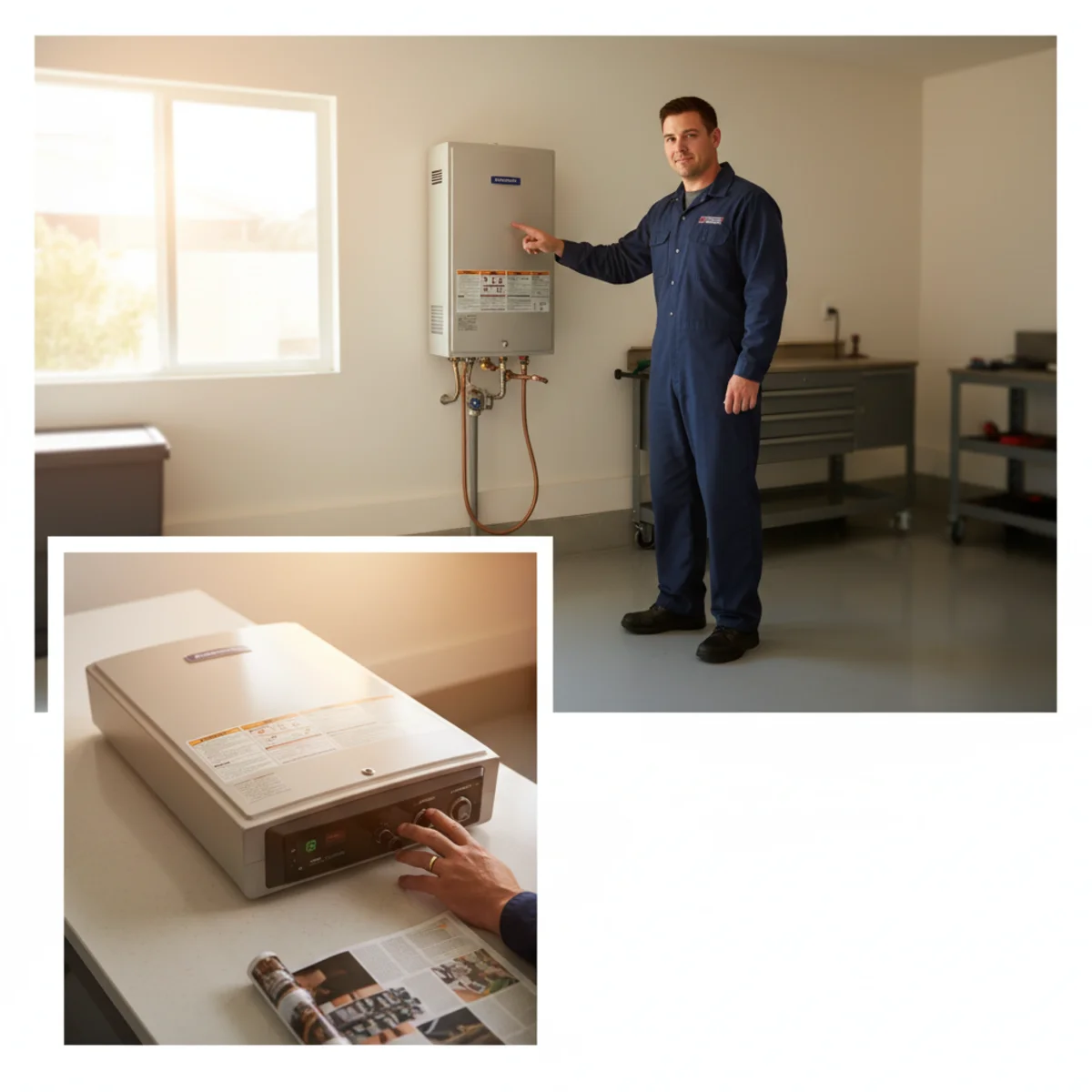
Your water heater is on its last legs, and now you're facing a choice: replace it with another tank, or switch to a tankless unit. It's a bigger decision than it looks, because the two work in fundamentally different ways.
Pick wrong and you either overspend up front or end up frustrated with hot water that doesn't keep up. Endless hot water and lower bills sound great, but tankless costs more to install and, in our hard-water area, needs the right care to last.
So which is right for your Bloomington home? This breakdown compares how each type works, what they cost over time, and how our local water affects the decision, so you can choose with confidence and get it installed right.
Key Takeaways
- Tank heaters store and constantly reheat 40 to 50 gallons; tankless units heat water on demand with no tank.
- Tankless offers endless hot water, a smaller footprint, and a longer lifespan, but a higher upfront cost.
- Traditional tanks cost less to install and are simpler to service, but use more standby energy and last fewer years.
- Bloomington's hard water scales both types; tankless units especially need descaling to protect performance and warranty.
- The right choice depends on household size, hot-water demand, budget, and how long you plan to stay.
Need a plumber in Bloomington, CA? We answer 24/7.
(207) 419-2600How does each type actually work?
The core difference is storage versus on-demand heating.
A traditional tank water heater keeps 40 to 50 gallons (sometimes more) hot and ready at all times. When you open a hot tap, stored hot water flows out and cold water refills the tank to be reheated. It works around the clock to keep that reservoir warm, even when no one's home, which is called standby loss.
A tankless water heater has no reservoir. When you turn on a hot tap, water flows through the unit and a powerful gas burner or electric element heats it instantly as it passes. When you close the tap, it shuts off. You're only heating water when you actually use it.
That single design difference drives nearly every other trade-off: capacity, energy use, size, lifespan, and cost. Our tankless service and standard installation cover both.
What are the advantages of a tankless water heater?
Tankless units win on several fronts that matter to a lot of households.
- Endless hot water: because it heats on demand, you won't run out mid-shower, even with back-to-back showers, within the unit's flow capacity.
- Energy savings: no standby loss means it isn't burning energy to keep a tank warm all day, which typically lowers operating costs.
- Space: a tankless unit mounts on the wall and is roughly the size of a small suitcase, freeing up floor space in the garage or closet.
- Longevity: well-maintained tankless units often last 15 to 20 years, noticeably longer than a typical tank.
- Lower leak risk: with no large tank to corrode and rupture, you avoid the classic flooded-garage failure.
For larger families, homes tight on space, or anyone tired of cold showers, those benefits are compelling, provided the unit is sized and maintained correctly.
When does a traditional tank make more sense?
Tank heaters are far from obsolete. For many homes, they're still the practical pick.
The biggest reason is upfront cost. A tank unit costs less to buy and usually less to install, especially as a like-for-like swap that reuses existing connections. Switching to tankless can require gas-line upsizing, new venting, or electrical work, which adds to the project.
Tanks are also simpler. They're easy to service, parts are inexpensive and widely available, and almost any plumber can work on one. And a tank delivers a large volume of hot water all at once, which suits homes that run several fixtures simultaneously without worrying about flow limits.
If your budget is tight, your current setup is tank-based, or you simply prefer proven simplicity, a high-efficiency tank is a solid, sensible choice.
How does Bloomington's hard water change the decision?
This is where local conditions really matter. Our water is generally hard, and minerals scale up the inside of any water heater. Verify the current level against the latest West Valley Water District water-quality report.
In a tank, that scale settles as sediment on the bottom and shortens the unit's life. In a tankless unit, scale builds inside the narrow heat exchanger, where it does more harm faster: it restricts flow, reduces efficiency, can trigger error codes, and many manufacturers require regular descaling to keep the warranty valid.
The takeaway isn't "avoid tankless." It's "plan for the water." Tankless units in Bloomington should be descaled on a schedule, and pairing either type with a water softener protects your investment. Soft water means less scale, longer equipment life, and fewer service calls.
What about upfront cost versus long-term savings?
Money usually drives the final call, so it helps to think in two timeframes.
Up front, a tank heater is the cheaper project. Tankless costs more for the unit itself and often more to install, because of potential gas, venting, or electrical upgrades.
Over the long run, tankless can narrow or close that gap. Lower standby energy use means lower monthly operating costs, and a longer lifespan spreads the cost over more years. Whether the savings fully offset the higher install price depends on your hot-water habits and how long you stay in the home.
A useful rule of thumb: if you plan to stay many years and value endless hot water, tankless often pays off. If you're cost-focused, may move soon, or want simplicity, a tank is the safer bet. We'll give you upfront, flat-rate pricing on both so you can compare real numbers, not guesses.
Which should I choose for my Bloomington home?
There's no single right answer, only the right answer for your home.
Lean tankless if you have a larger household, want to stop running out of hot water, are tight on space, plan to stay put for years, and are willing to keep up with descaling in our hard-water area.
Lean traditional tank if upfront budget is the priority, you already have a tank setup, you want the simplest service down the road, or you frequently run many fixtures at once.
The best move is to have a plumber assess your home's gas, venting, electrical, and demand before deciding. If you'd like a straight recommendation with no pressure, contact us or browse our plumbing services. We'll size it right and install it to code, with permits pulled.
Frequently Asked Questions
Related Plumbing Services
Have a plumbing problem in Bloomington?
Don't let a small issue become an emergency. Call for fast, local, upfront-priced help.
Related Articles
All articlesWater HeatersHow Long Do Water Heaters Last?
Wondering how much life your water heater has left? Here's how long they typically last and what shortens that in our hard-water area.
Water HeatersHow Often Should You Flush a Water Heater?
It's one of the highest-value maintenance tasks you can do — especially with Bloomington's hard water. Here's how often to flush your water heater.
Water HeatersWhy Your Water Heater Is Not Producing Hot Water
A cold shower is a bad way to start the day. Here are the usual reasons a water heater stops making hot water — and what to check.